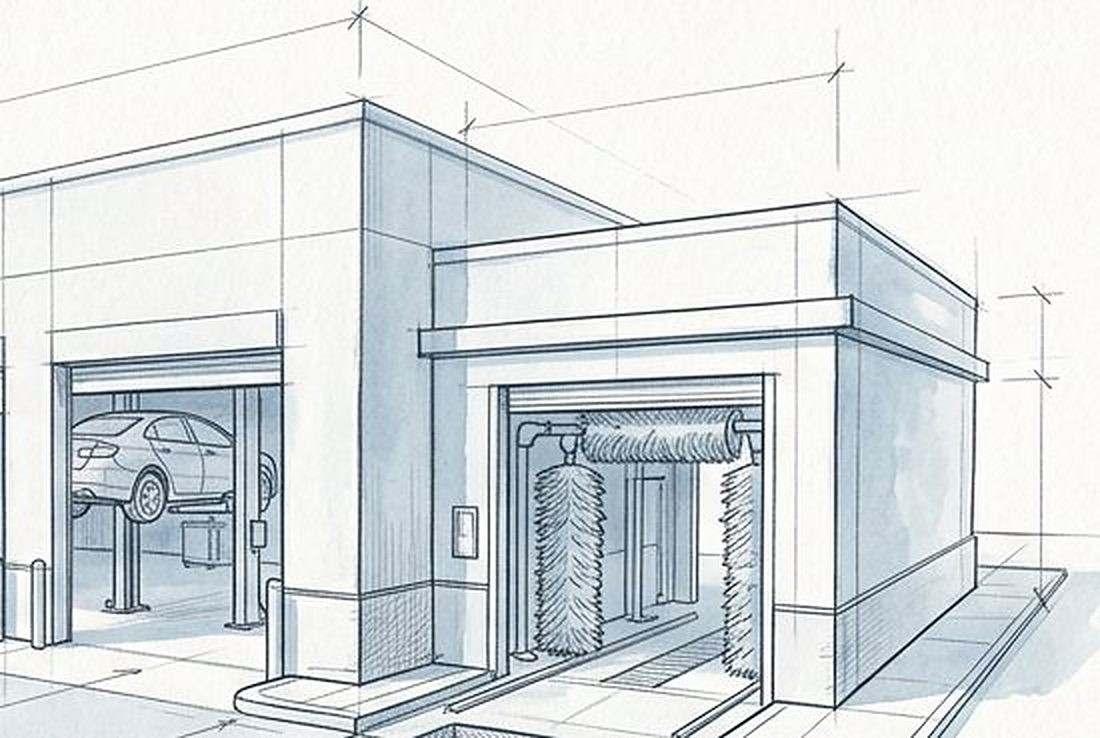
Every vehicle service site discharges wastewater. Not every site manages it.
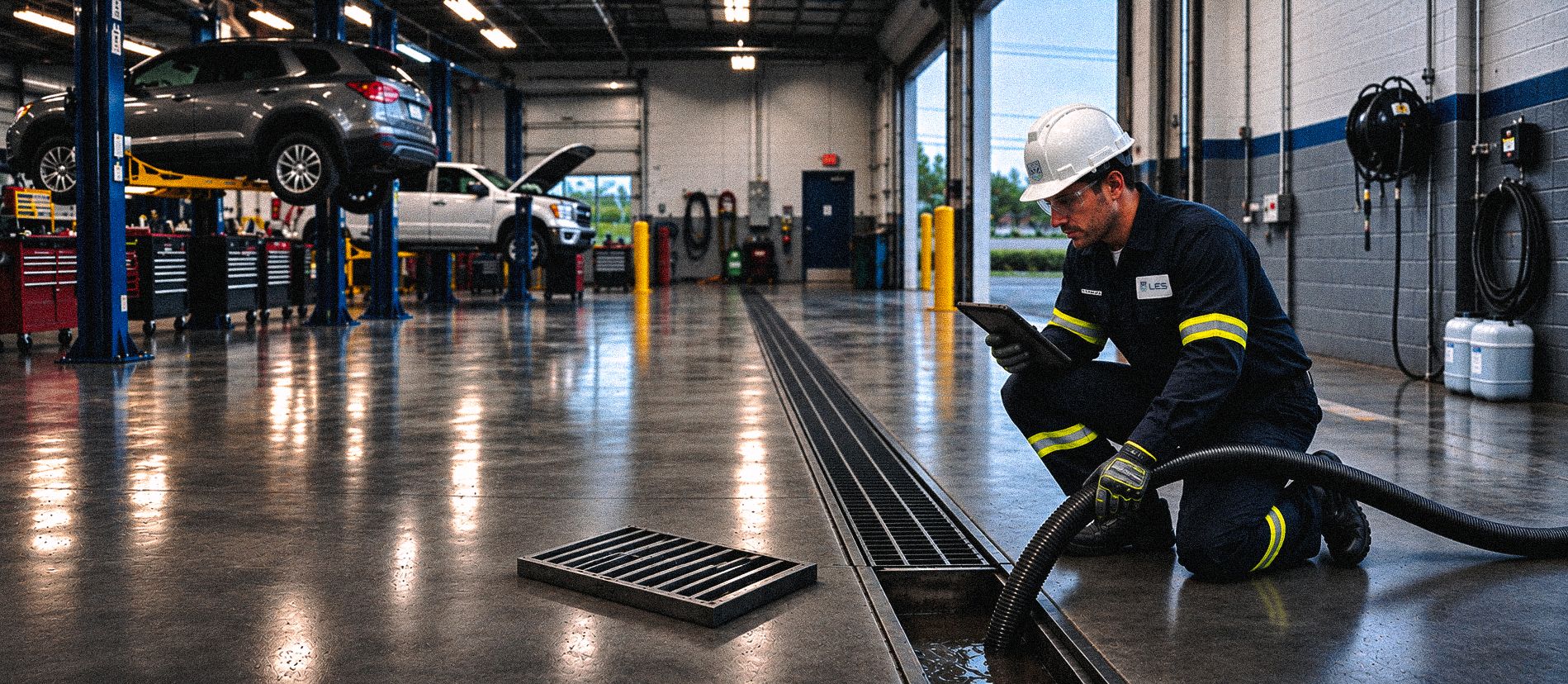
Separators, grit traps, wash bay drains and lot drainage stand between your business and a discharge violation. At most sites, no one is assigned to watch them. LES services them nationwide, records every visit and recycles what we collect.
Trusted by leading multi-site operators nationwide
Your separator can look fine and still fail your permit.We inspect it every visit.
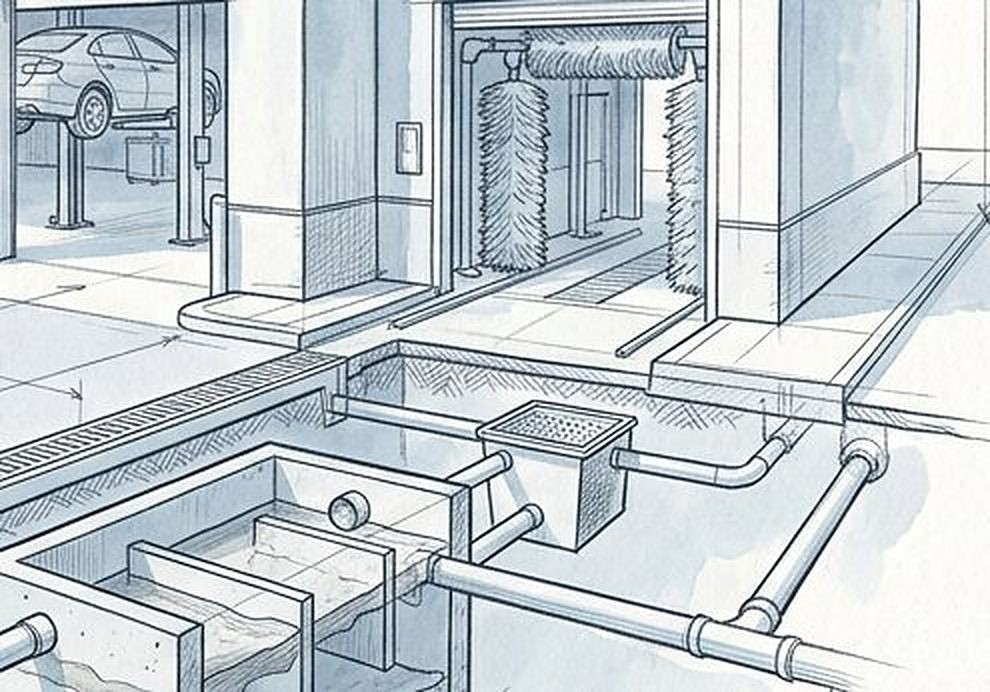
Everything that touches your bay floor or lot leaves the property in water. That includes oil and fuel drips, coolant, brake dust, tire wear, road salt, de-icer, wash chemicals and dirt tracked in on every wheel.
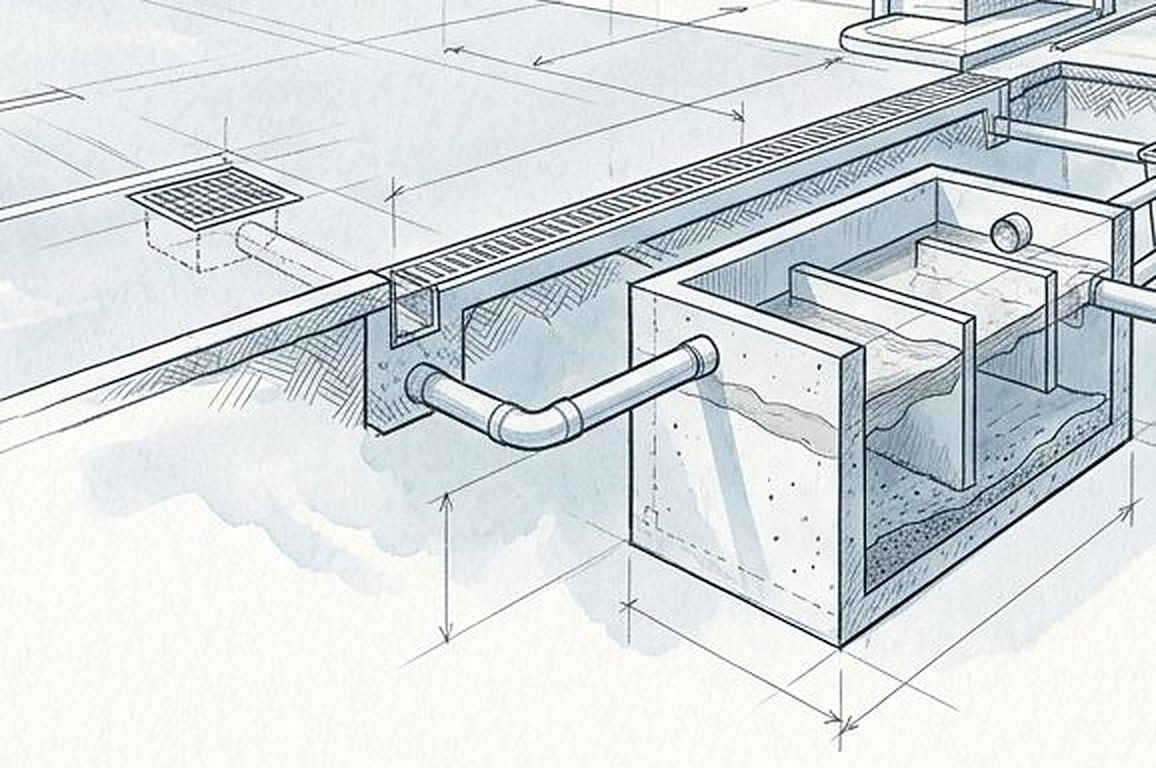
Separators, grit traps and catch basins are there to catch that material before it leaves. When they stop working, the discharge doesn’t stop. It just stops being treated.
Many sites have both — on different parts of the property, under different rules. That often comes as a surprise during an inspection.
The requirement
Catch oil, fuel and sediment on site — with separators, grit traps and catch basins — before the water leaves your property.
The maintenance standard
Keep the device in working condition. A separator full of sediment has no room left to separate. It passes oil straight through, no matter when it was last pumped.
The proof
Service records, manifests and disposal records, ready when asked. In a stormwater or pretreatment inspection, maintenance with no records counts as no maintenance.
Four vendors, four invoices, and no one responsible.One contract instead.
Most vehicle service businesses use separate vendors for these four jobs — or no one at all. With LES, you get one contract, one reporting system and one number to call.
A tire store and a parcel hub load the same devices very differently.Your schedules should differ too.
The equipment is mostly the same everywhere. What changes is what fills it, how fast and what it costs when one is down. That’s why a schedule copied from a template is usually wrong.
What makes up most of the load
Oil at a quick lube. Sediment at a tire store. Wash chemicals and reclaim solids at a car wash. All of it at once at a dealership.
What a lost bay costs
A twenty-bay dealership that loses one bay loses 5% of its capacity. A three-bay quick lube loses a third of the store, with nowhere to move the work.
Seasonality
Tire changeover packs months of road salt and sand into a few weeks. Car washes peak after bad weather. Fleet stays steady all year.
When the site is empty
Retail sites close at six. A parcel hub sorts overnight and rolls out at dawn. A rental return site runs on the flight schedule. Some sites are never idle — just quieter.
Who decides
A single-store owner decides alone. A franchisee decides for one site. A regional facilities director decides for four hundred, and purchasing runs the process.
Stormwater exposure
A small retail lot versus a distribution yard covering acres. The paved area is the risk, and it can be a hundred times bigger from one site to the next.
What fills your trap depends on what you do all day.Find your format.
Each format below fills its equipment differently and buys differently. Pick the one that matches your sites.
Not a retail site? Fleet & distribution operations
Parcel hubs, distribution centers and for-hire carriers. Not a retail auto site — these are industrial sites with wash racks, shops and yards covering acres. Many never close.
Two streams, two permits, two vendors.Here’s which one we are.
A vehicle service site produces two regulated waste streams. Each one falls under a different permit and is handled by a company with a different license. Both carry the risk of fines. Most businesses have only assigned one of them.
You need both. LES is one of the two, and we say so plainly up front.
Handled by LES
Separator and grit trap contents, wash water, bay and lot drainage
Oil water separators and sand interceptors
Grit traps and catch basins
Wash bay, trench and pit drainage
Reclaim tanks and wash water
Non-hazardous facility wastewater
Compliance records and recycling
What is at stake
Covered by your pretreatment discharge limit or your stormwater permit, depending on where the water goes. This is the stream that most often has no one assigned to it.
Not LES: a permitted hazardous waste hauler
Used motor oil, oil filters, coolant and antifreeze
Used motor oil
Oil filters
Coolant and antifreeze
Scrap tires
Batteries and solvents
Hazardous waste of any classification
What is at stake
These are classed as hazardous. A spill brings a Notice of Violation, and disposal outside a permitted chain brings fines. This stream needs a properly permitted vendor and manifests on file, just like the other one.
Limits change without warning. FOGLaw® tells us, and your schedule changes with them.
Discharge limits are set locally. They differ from place to place, and they change without warning. A single-site business deals with one set. A multi-site business deals with hundreds, in local areas that don’t agree with each other. LES tracks wastewater rules through FOGLaw®, sets each location’s schedule by local rules and how fast that site’s equipment fills, and keeps records of every visit.
01
We track the rules
FOGLaw® tracks more than 6,000 rules nationwide. So a limit change updates your service schedule before it shows up on your inspection report.
A tire store and a quick lube down the street can answer to different limits.
02
We do the service right
Every visit follows a written process. It’s built to make sure the unit is fully pumped out and cleaned.
1Cones
2Lid
3Hose
4Pump
5Clean
6Inspect
7Record
03
If we cause it, we own it
Where an error by LES results in a qualifying emergency service or Notice of Violation, LES covers the associated cost in accordance with the guarantee.
Three locks. One responsible partner.
The TripleLock Compliance™ Guarantee
Rules tracked, service done right, and a guarantee that backs both — across every site you run.
You’re paying to haul away mostly water. We separate it and send each part somewhere useful.
Separator and grit trap waste isn’t just a disposal cost. Water, oil and solids all separate, and each part has a better place to go than a landfill.
LES owns the collection, hauling, records and recycling from start to finish. So we can prove the results for each location, not just claim them. That’s what a corporate sustainability team needs when someone asks them to back up a number.
Separator & grit trap waste
One load, three outputs
Oil
Water
Solids
Recovered oil
Separated and sent for reuse.
Treated water
Harmful material removed, then on to the city sewer — the local plant cleans it further.
Dried solids
Dried into a dry product instead of hauled wet.
94%
of what we collect is recycled, with chain-of-custody records ready for ESG reporting — proven per location, not just claimed.
Stop finding out at the inspection. Find out at the assessment.
Separators, grit traps, wash bays and lot drainage — checked, serviced, recorded and recycled by one company that owns the whole chain. And scheduled around your bays, not a truck route.
What happens next
1We review your sites, systems, service history and local rules.
2We show you where the risk is — before it becomes an emergency.
3You get one program, one standard and one record for every site.
No. Used motor oil, oil filters, coolant and antifreeze are classed as hazardous and need a handler with a different permit. You almost certainly have a vendor for them already. LES handles the other stream — what your oil vendor never touches: oil water separators, grit traps, wash bay and trench drains, reclaim tanks and catch basins.
What is an oil water separator and why does my site have one?
It's an underground tank that slows wastewater down so it can separate. Oil rises, sediment sinks and fairly clean water leaves from the middle. Vehicle service sites have them because oil, fuel and coolant reach the bay floor and the lot. Discharge limits don't allow that water to leave the property untreated.
How often should a separator or grit trap be cleaned?
Based on how fast it fills, not the calendar. A tire store up north fills a grit trap faster in changeover season than a quick lube does all year. The device also has to be kept in working condition. That's a higher bar than being pumped now and then. A separator full of sediment has no room left to separate, so oil passes through no matter when it was last serviced.
What is the difference between a grit trap and an oil water separator?
The difference is what they're built to catch. A separator catches oil, fuel and other fluids lighter than water. A grit trap catches sand, silt, road salt, brake dust and heavy solids. Many vehicle service sites need both. Some devices do both jobs — sand and oil interceptors are common.
Can a site fail an inspection even when the separator is pumped on schedule?
Yes. Most rules are based on working condition, not how often you service. If baffles have rusted, the inlet or outlet has failed or sediment has filled the tank, the device stops working. Yet the service records look perfect. That's why every LES visit includes a written condition inspection, not just a pump-out.
Which permit governs my bay drains and lot?
It depends on where the water goes. If it goes into the sanitary sewer, a pretreatment discharge limit applies. If it goes into a storm drain, a stormwater permit applies, and the water reaches rivers and lakes untreated. Many sites have both, on different parts of the property, under different rules. That often comes as a surprise during an inspection.
Do you service car washes as well as service bays?
Yes, and car washes are a different problem. For a car wash, it's not mainly about compliance. Reclaim performance and water costs drive a tunnel's profits. Reclaim tanks, pits and trench drains all need service on a schedule that keeps the tunnel running, not one that suits a truck route.
Can LES service a chain across multiple states?
Yes. LES serves more than 129,500 customer locations from 90+ facilities nationwide, with the same written process at every site. Service history is reported across all your sites, so you don't have to piece it together from separate vendor invoices. Schedules are still set for each site, because a store in Minnesota and a store in Arizona don't fill the same way.
What records do we get?
You get a manifest copy on site at every visit. Final manifests, with disposal details, are kept in an online portal. You also get an inspection record on the device's condition, baffles and structure. That's the record a stormwater or pretreatment inspector asks for. It needs to exist before they ask, not get pieced together after.
Which vehicle service businesses does LES serve?
Auto dealerships, car washes, quick lube and oil change chains, tire and wheel service, car rental, collision and body shops, and fleet and distribution sites. Any site with a separator, a grit trap, wash bays or lot drainage — which is nearly all of them.