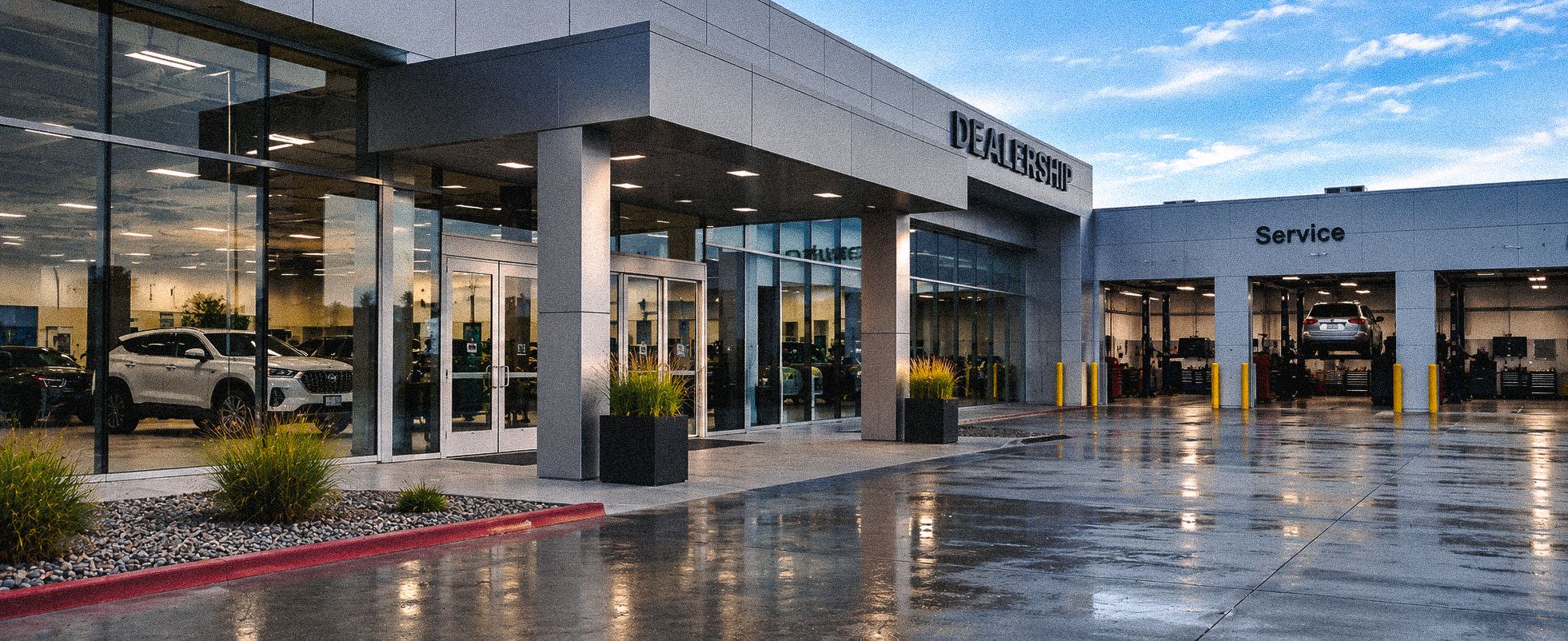
A Closed Service Bay Is the Most Expensive Room in the Building.
Drain lines, oil-water separators and grit traps — cleaned, repaired, upgraded or installed new. We work around your shop hours, so bays stay billable and the service drive stays clean.










Fixed operations carry a dealership. Service and parts bring in about half of gross profit. Every bay in the shop bills by the hour it is open.
So when a service bay drain backs up, the cost is not a plumbing bill. It is the technician standing idle and the customer whose car is no longer being worked on. It is the repair order that slips to tomorrow.
And it all happens on the floor, where waiting customers can see it.


- customer locations served
- 129,500+
- facilities nationwide
- 90+
- trucks and tankers
- 1,000+
- in liquid waste
- 24+ years
- on-time service
- 95%
- of material recycled
- 94%
- inspection every visit
- Documented
- Compliance Guarantee™
- TripleLock
Eight Services That Usually Take Four Vendors.We Do All Eight.
Eight services, one provider, one set of records. Most dealerships buy three or four of these from three or four different vendors.
The lines from service bay floor drains and trenches to the separator, cleared before they clog.
Clogged lines are the usual reason a bay goes down. Cleaning them prevents trouble. Clearing them after a backup is an emergency.
A full pump-out of built-up oil, sludge and sediment, with a recorded inspection of the unit at every visit.
The unit most likely to fail an inspection. Because it is small, it is also the one most often treated as an afterthought.
Sediment and grit interceptors, including those serving wash bays.
Left alone, grit flows into the separator and shortens the time between cleanings.
Hauled to LES facilities, processed and recycled — 94% of what we collect is put to good use again.
A recorded chain of custody from your shop floor to reuse, reportable for each store.
Failed baffles, rusted T-pipes, cracked bodies, damaged lids and broken line connections — handled through screened contractors.
Found during routine inspection, while it is still a scheduled repair and not a closed bay.
Sizing, permit support and installation for new stores, relocations and added bays.
A new rooftop or added bays need a separator sized for what the shop will really produce, not what the plan assumed.
Replacing units the shop has outgrown through more cars, added bays or a new service mix.
No cleaning schedule fixes a capacity problem. A shop that has doubled its bays cannot comply with the unit it opened with.
Catch basins, storm drains and stormwater separators across customer, inventory and employee parking — cleaned, with records.
A dealership is mostly asphalt. Lots that drain vehicle fluids and sediment fall under the city stormwater program. That is a different regulator from the one that covers your separator.
A Drain Problem Your Customers Can Smell Costs More Than the Repair.
A restaurant kitchen is behind a wall. A dealership shop is not. Customers sit in the lounge, walk the service drive and, in many stores, can see straight into the bays.
That changes what a drain problem costs. Odor near the service entrance, standing water on a shop floor or a backed-up wash bay is not out of sight. It happens in front of the people deciding whether to service here again — and whether to buy their next car here.
Four Inspectors, None of Them Coordinated.One Set of Records for All of Them.
Dealerships answer to more inspectors than most sites, and those inspectors do not work together.
The local pretreatment authority
Cares about what leaves the separator, and whether the unit is kept in good working order. That is a higher bar than being pumped on schedule.
State environmental agencies
Care about how waste fluids are handled, stored and disposed of, with manifests that match up.
The stormwater program
Cares about lot and deck drainage, especially where inventory is parked outside. It has its own inspection schedule and its own records, separate from the pretreatment authority.
The manufacturer
The dealer agreement sets facility and image standards. More and more, these include environmental and housekeeping rules, checked on the OEM's schedule, not yours.
LES leaves a manifest copy on site at every visit. We keep final manifests, with disposal details, in an online portal for five years. Every visit also produces an inspection record covering separator condition, T-pipes, baffles and lids. That is usually the first record any of the four asks to see.
Never Lose a Billable Hour to the Vendor Clearing Your Drains.
A shop that opens at seven and writes repair orders until six has a narrow service window. Losing a bay mid-morning to a vacuum truck defeats the purpose.
Scheduled outside shop hours
Early morning, evening or weekend service, agreed store by store, not set by what suits the route.
Bay returned ready to work
Drains cleared, covers secured and the floor ready to use before the first technician clocks in.
Every visit inspected
Separator condition is checked and recorded every time. Problems show up as scheduled repairs, not as a closed bay.
One vendor, several streams
Separator, bay drains, wash bay and lot drainage on one contract, one schedule and one set of records.
What We Don't Take, So You Know Who to Call
Stated plainly: LES is a non-hazardous liquid waste company. Dealership shops make several waste streams that fall outside that.
LES handles
- Drain line cleaning, bay to separator
- Oil-water separator cleaning and inspection
- Grit trap cleaning
- Wastewater disposal and recycling
- Separator and line repair
- New separator installation and upgrade
- Wash and detail bay drainage
- Catch basins, storm drains and stormwater separators
LES does not
- Used motor oil — classed as hazardous
- Oil filters — classed as hazardous
- Coolant and antifreeze
- Parts washer solvent
- Underground storage tanks and fuel systems
- Batteries, tires, solid waste, paint waste and refrigerant
How many bays could you lose to a drain no one has checked?
We will check the separator, bay drains, wash bay and lot drainage at a typical store. Then we set schedules around your shop hours.