A Restaurant Can Close for the Night. A Care Facility Cannot.
Hospitals and senior living communities run the same kitchens, drains and separators as everyone else. But their buildings never empty, and inspections arrive without notice. LES works around care and keeps the records ready before anyone asks.
Trusted by leading multi-site operators nationwide
The Same Waste.A Completely Different Consequence.
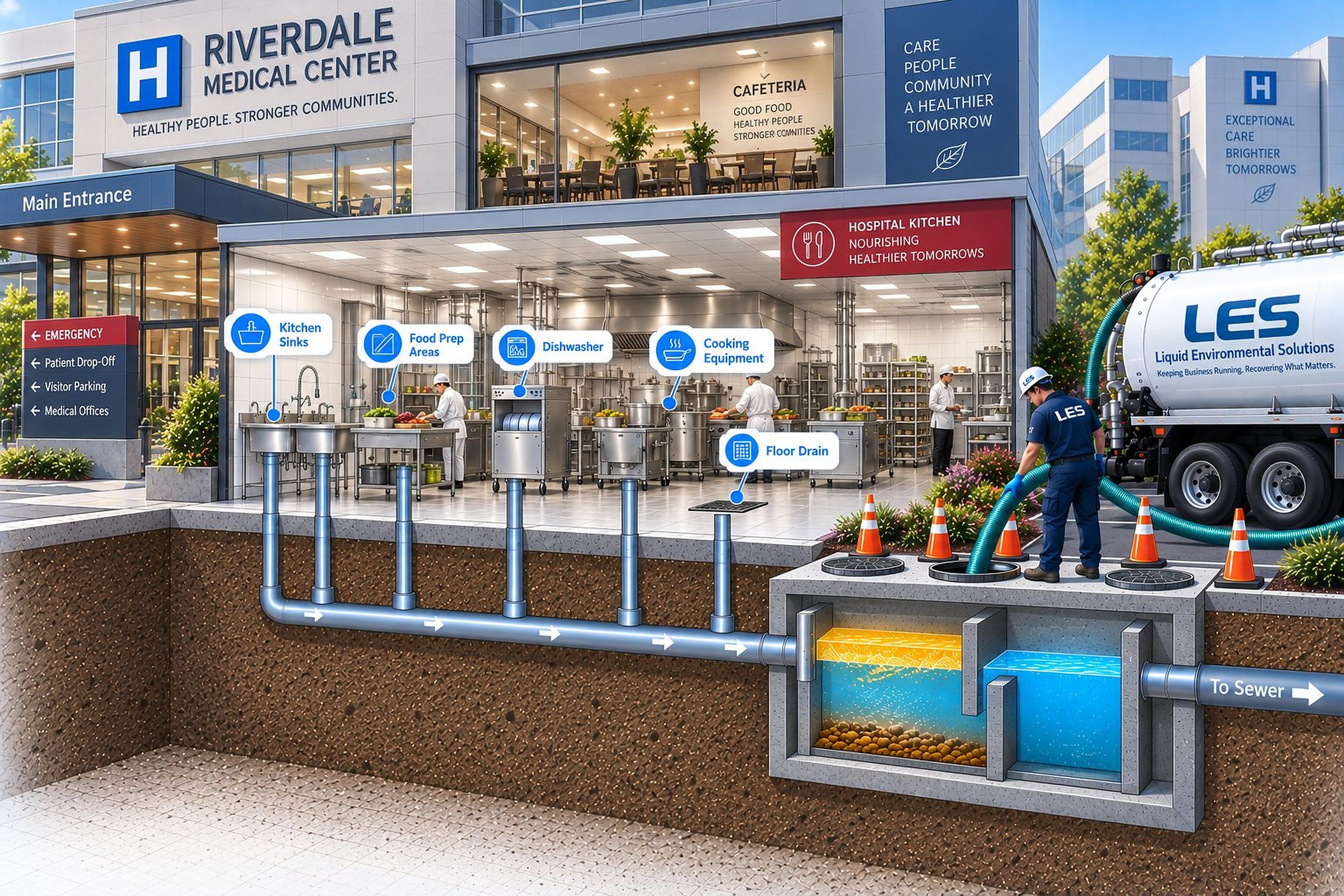
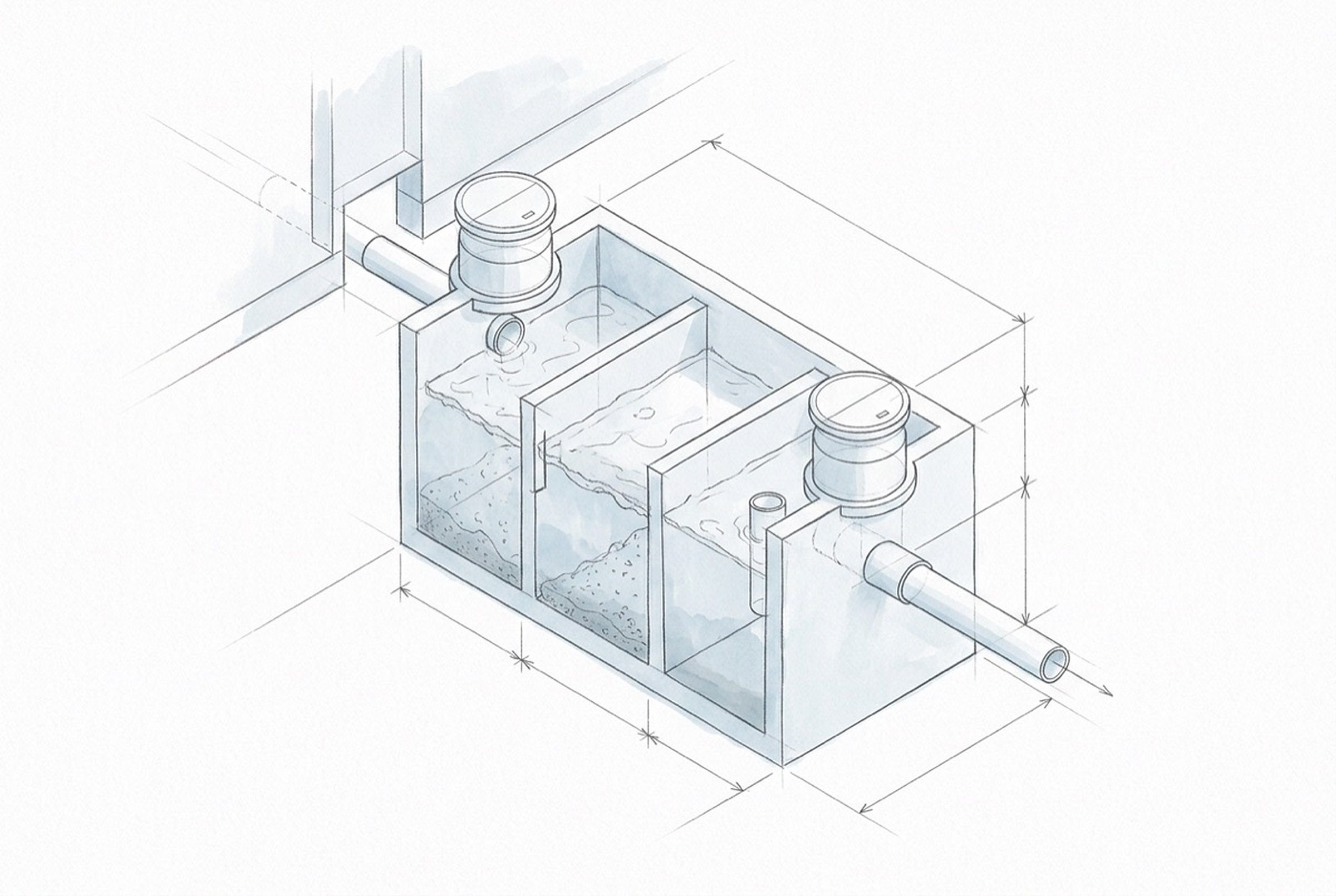
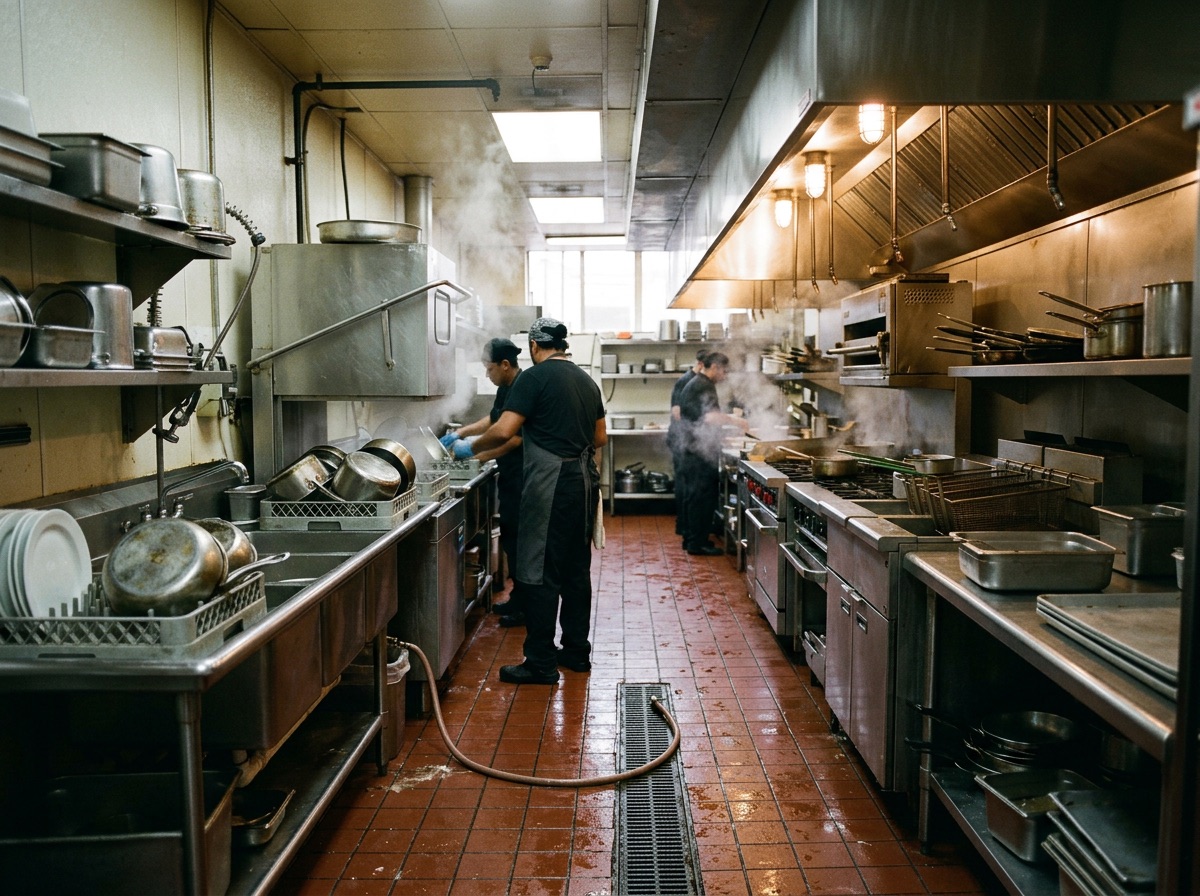
The fats, oils and grease (FOG) from a hospital cafeteria are the same as the FOG from a restaurant. The separator behind an ambulance bay works just like the one behind a fleet yard.
What changes is what happens when they fail.
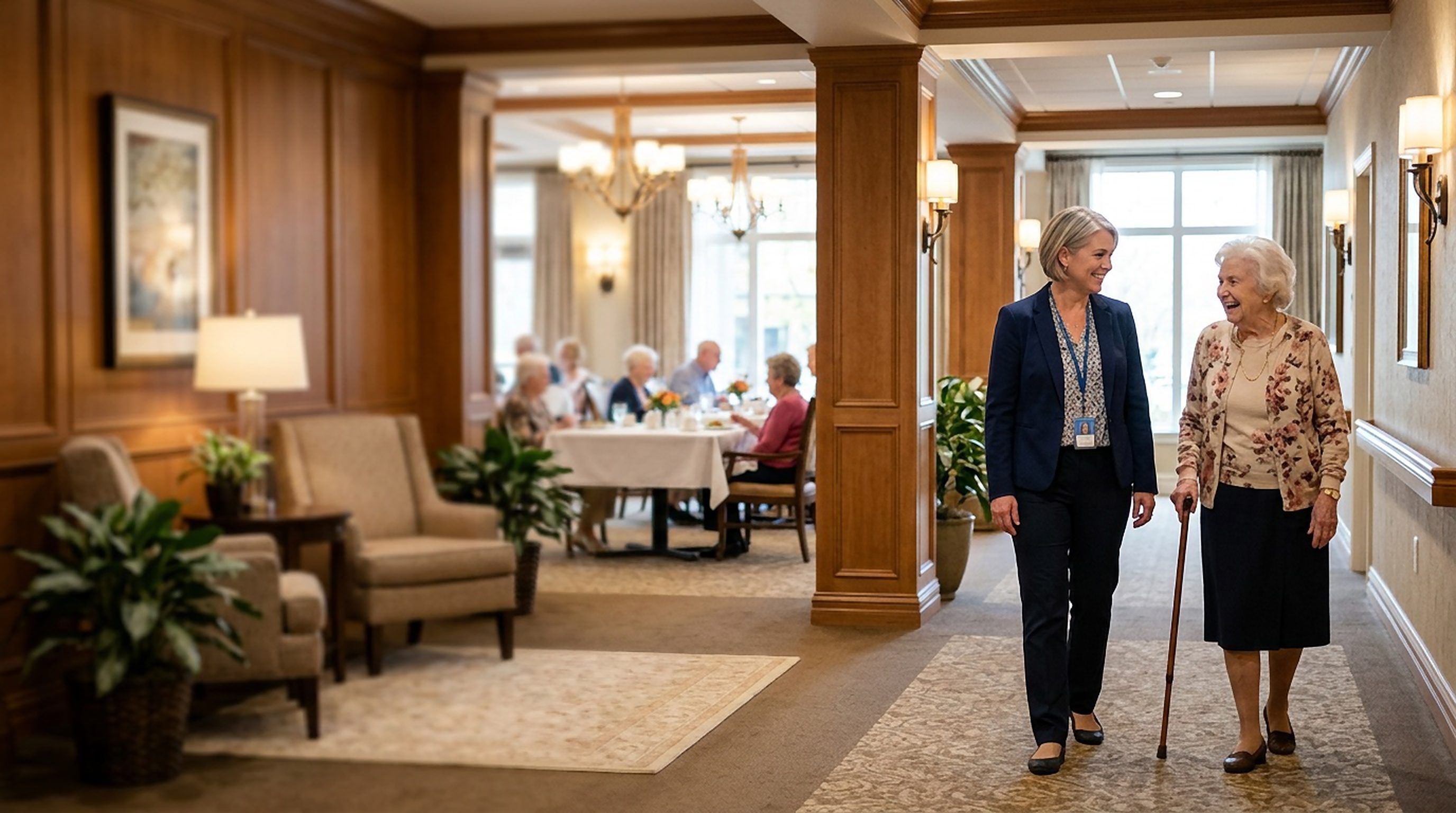
A restaurant with a backup closes for a night and reopens. A care facility can’t close. It can’t move its residents or skip the next meal. The failure doesn’t end with a repair bill. It ends with a hallway full of odor that reaches people who can’t walk away from it. And it ends with a record an inspector will ask to see.
The building never empties
Work happens around patients, residents, visitors and clinical staff who are still there. Access routes, noise, odor and infection control decide whether the work can happen at all. They are not small details.
Two compliance layers, not one
The local FOG rules apply just as they do to a restaurant. On top of that come accreditation and state licensing. Their surveys cover the environment of care, sanitation and facility maintenance records. In that setting, a grease trap with no service history is more than a facilities problem.
Nobody schedules the inspection
Surveys and licensing checks arrive without notice. A service history pulled together after they ask is not the same as one that was already there.
The scope line is narrow, and it matters
LES handles non-hazardous liquid waste. Some buildings have teaching labs, a student health center or a dialysis unit. There, being clear about what LES does not touch matters as much as what it does. See the scope section below.
What LES Manages
Most healthcare facilities manage these four vendor types separately. We bring them together. Different trucks and technicians, but one contract, one reporting system and one number to call.
Both run kitchens all day in buildings that are never empty. Almost everything else is different: how they buy and how they are serviced.
Who is on site
A hospital has an engineering team. They notice a slow drain and read a service report. A senior living community has an executive director focused on residents and staff. Nobody there is watching the interceptor.
The shape of the estate
One large campus with a central plant, an ambulance bay and parking garages. Or ninety small buildings across three states, each with a modest kitchen.
What the kitchen is for
In a hospital, the cafeteria supports the main work. In senior living, the dining room is where residents spend their day. It is a large part of what families pay for.
Who inspects, and against what
Hospitals face accreditation surveys and licensing checks. Senior living sites face state licensing checks and, in practice, families. Neither one gives notice.
How it is bought
A health system has a buying team and may require a formal bid. A senior living company has a regional facilities manager. They want one vendor for every site and one number to call.
Find Your Setting
Each setting below has its own equipment, buying patterns and rules to meet. Follow the one that matches your operation.
LES is a non-hazardous liquid waste company. In healthcare, that line matters more than in any other field. So we state it here instead of hiding it on another page.
LES handles
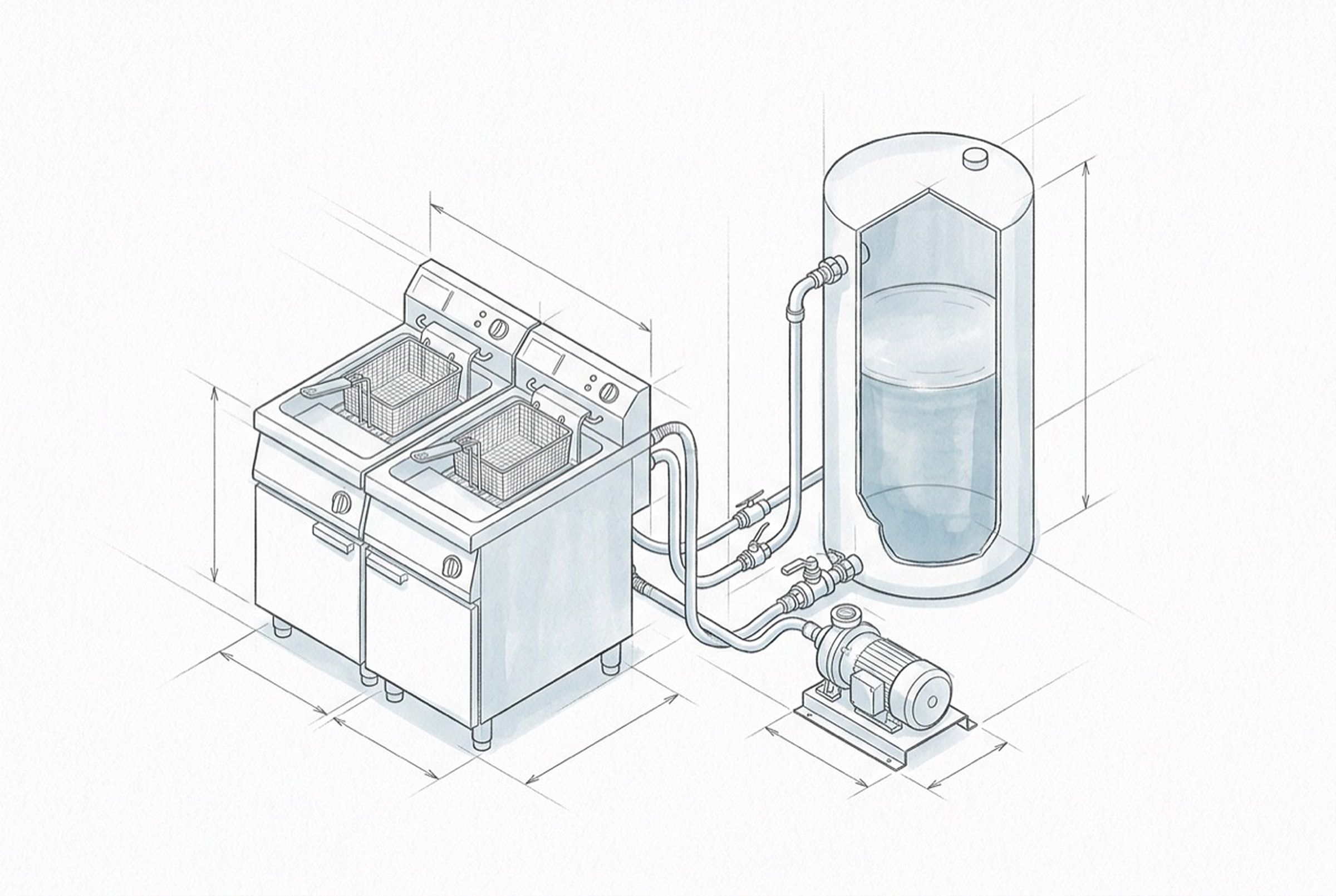
Kitchen grease traps and interceptors: cleaning, repair, replacement, installation
Used cooking oil collection and recycling
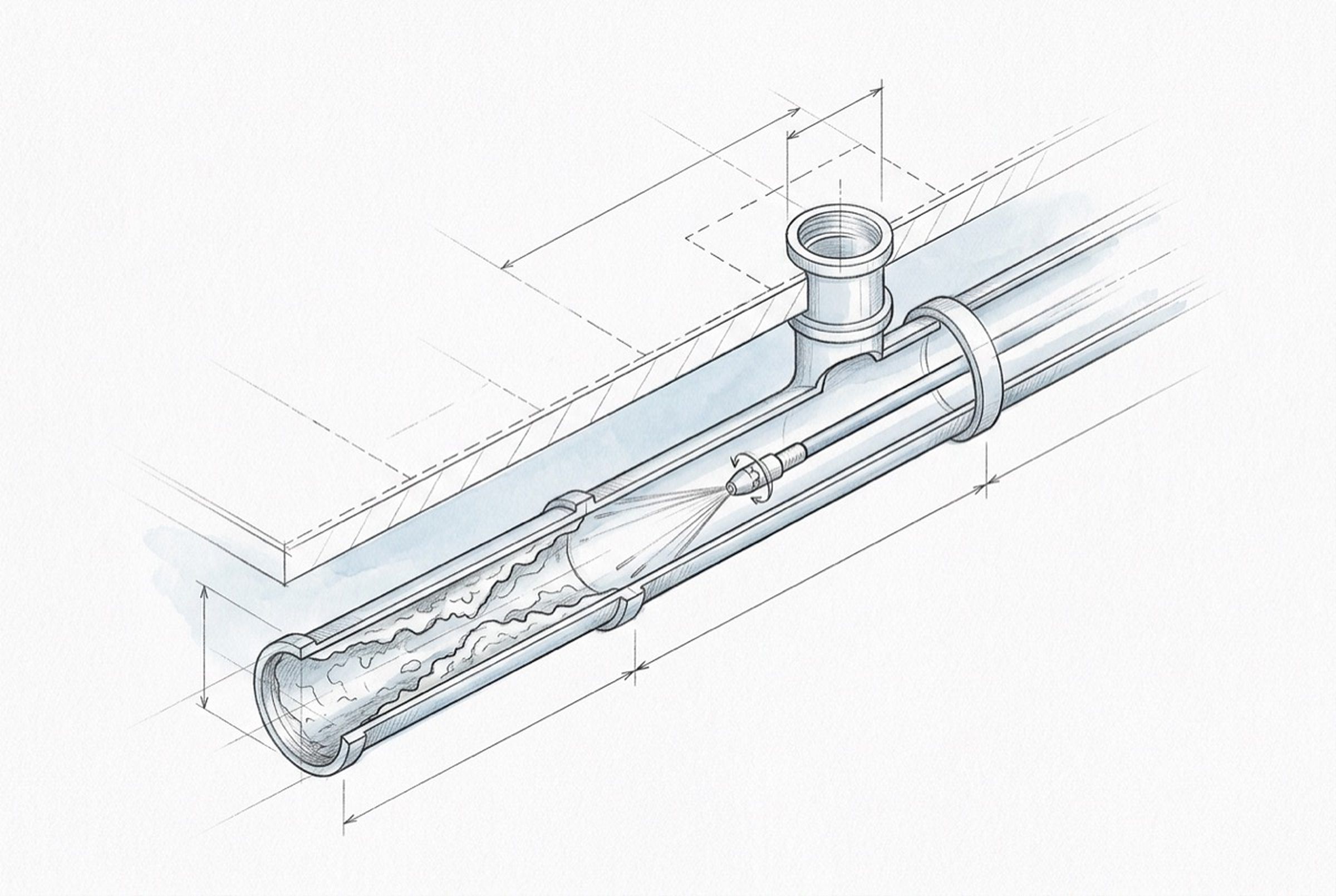
Drain and line cleaning
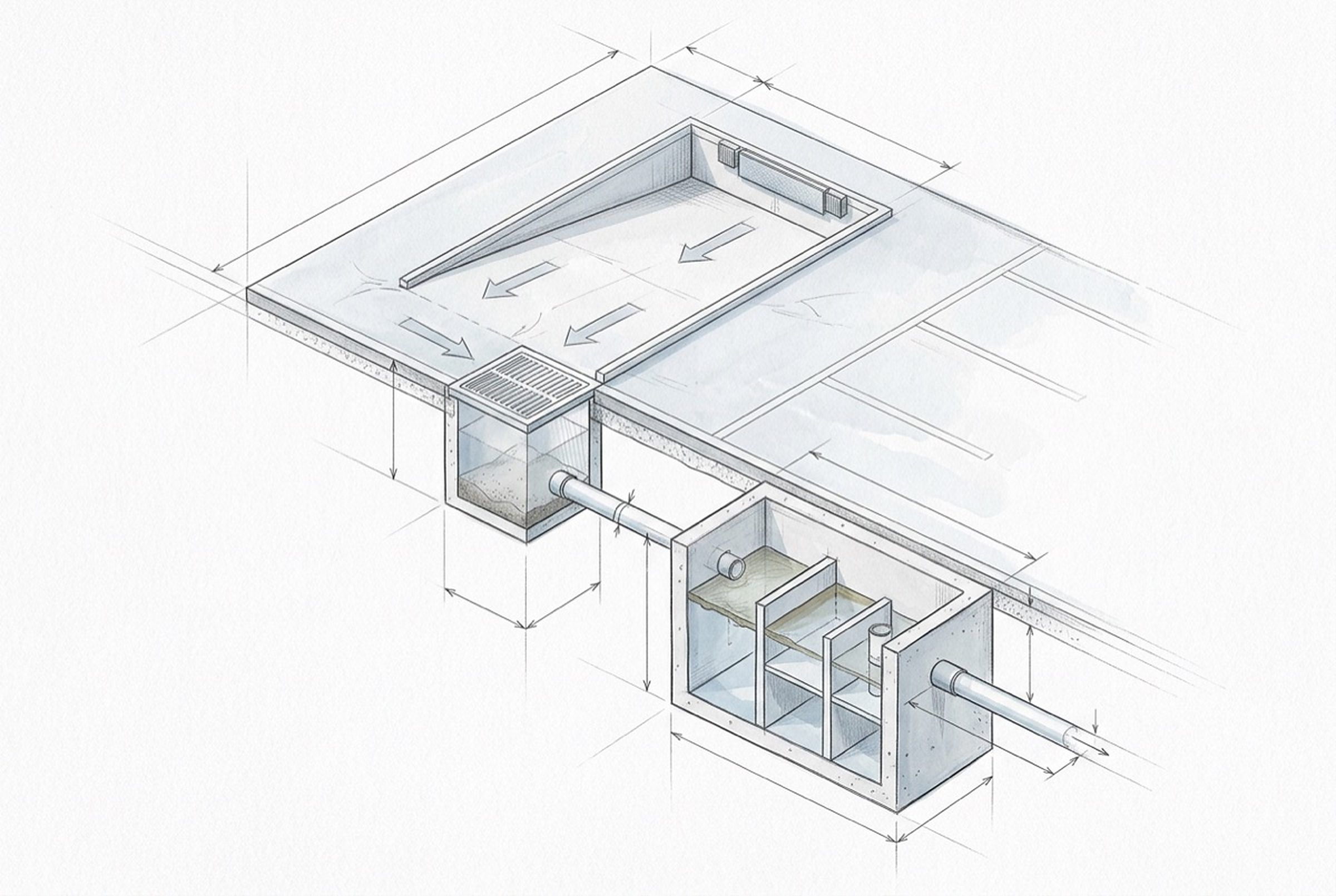
Oil water and stormwater separators, catch basins
Non-hazardous facility wastewater
Compliance records and recycling
LES does not
Regulated medical waste, red bag waste and sharps
Body fluids, including blood, urine and secretions
Dialysis effluent
Hydrotherapy, whirlpool and burn unit water
Expired saline, IV fluids and pharmaceutical waste
Hazardous waste of any classification
Compliance, Documented
FOG rules are local. They differ from place to place, and they change without warning. In healthcare, a second layer sits on top: accreditation and licensing. A different inspector reads the same records for a different reason. LES tracks the wastewater rules that apply to you through FOGLaw®. We set each site’s service schedule by both the local rule and that kitchen’s measured output. And we document every visit.
01
We track the rules
FOGLaw® tracks more than 6,000 applicable regulations nationwide. So a rule change reaches your service schedule, not your inspection report.
02
We do the service right
Every visit follows a documented seven-step process. It is designed to make sure the unit is fully pumped out and cleaned.
03
If we cause it, we own it
Where an error by LES results in a qualifying emergency service or Notice of Violation, LES covers the associated cost in accordance with the guarantee.
Healthcare systems publish sustainability goals and get asked to prove them. “Responsibly disposed of” doesn’t hold up to that question. A named destination does.
LES owns the whole chain: collection, transport, records and recycling. So the result is documented for each site, not just claimed. That is the difference between a sustainability claim and a sustainability report.
Used cooking oil is screened and heat-separated into a pure product.
That product is used to make renewable fuel, including biodiesel and sustainable aviation fuel
Grease is recovered from trap solids with 3-phase centrifuges instead of going to landfill
Restaurant and kitchen solids are dried out and sent to composting where it is available
Water is treated to remove harmful material before it goes into the city sewer.
Then the local treatment plant cleans it further
94%
of what we collect is recycled, with chain-of-custody records ready for ESG reporting
One partner for every building you operate.
Grease traps, separators, drains and campus wastewater. Collected, documented and recycled by one company that owns the whole chain. Scheduled around care, not around a route.
No. LES is a non-hazardous liquid waste company. These all need a licensed medical waste provider: regulated medical waste, red bag waste, sharps, body fluids, dialysis effluent, hydrotherapy water, and expired IV or saline fluids. LES handles the facility side. That means kitchen grease traps and interceptors, drains, oil water separators and campus wastewater.
What liquid waste does a hospital or care facility actually produce?
More than most people expect. Kitchen FOG from cafeterias, patient tray lines and retail food outlets. Used cooking oil. Oil water separator waste from ambulance bays, loading docks, fuel storage and parking garages. Grease and solids in drain lines. On larger campuses, central plant streams such as cooling tower and boiler blowdown, and laundry graywater.
Why is grease trap service different in healthcare than in a restaurant?
Because the building can’t close and the kitchen can’t skip a meal. A restaurant gets serviced overnight. A care facility serves three meals a day, every day, with no downtime. Work happens around patients, residents and clinical staff, which limits access, timing and noise. And service records are read by an accreditation or licensing surveyor, not just a health inspector.
How often does a healthcare kitchen need its grease trap cleaned?
Set the schedule by interceptor size and the waste you actually produce, not a general default. A useful guide is the 25% rule. Service the trap before grease and solids together fill a quarter of the tank. Past that point, FOG starts escaping into the city sewer no matter the schedule. Local rules also set a maximum time between cleanings, often 90 days.
Can LES work in occupied patient care areas?
Yes. We schedule service around meals, quiet hours and shift changes. LES runs both day and overnight routes, so work can move outside busy hours when that is better for the building.
Do you service separators at ambulance bays and parking structures?
Yes. Ambulance bays, loading docks, fuel areas and parking garages collect motor oil, antifreeze, tire wear particles and de-icing chemicals. That runoff drains under your stormwater permit. So the state of your separator and catch basin is a permit issue, not a housekeeping one.
Can LES service a senior living portfolio across multiple states?
Yes. LES serves more than 129,500 customer locations from 90+ facilities nationwide. Every site gets the same documented process. Service history and compliance records report across your whole portfolio. You don’t have to piece them together from separate vendor invoices. Schedules are still set for each building.
What documentation do we get for accreditation surveys?
You get a manifest copy on site at every visit. Final manifests, with disposal details, are kept in an online portal. You also get an inspection record. It covers the interceptor, baffles, structure and separator. Surveys come without notice, so the record has to exist before anyone asks.
Which healthcare settings does LES serve?
Hospitals and health systems. Assisted living and senior living. Skilled nursing and rehab. Memory care. Outpatient and surgical centers. Medical office buildings. Any site with a commercial kitchen, a separator or drains. That is nearly all of them.
Do you offer emergency service?
Yes, 24/7/365 for current customers. Dispatch comes from the nearest LES location, not a call center passing the job to a subcontractor. That matters in a building that can’t close while it waits.