

A typical vacuum contractor
A typical vacuum contractor pulls it from your site and then has to find somewhere to take it. Once the truck leaves, you often lose sight of where it goes.
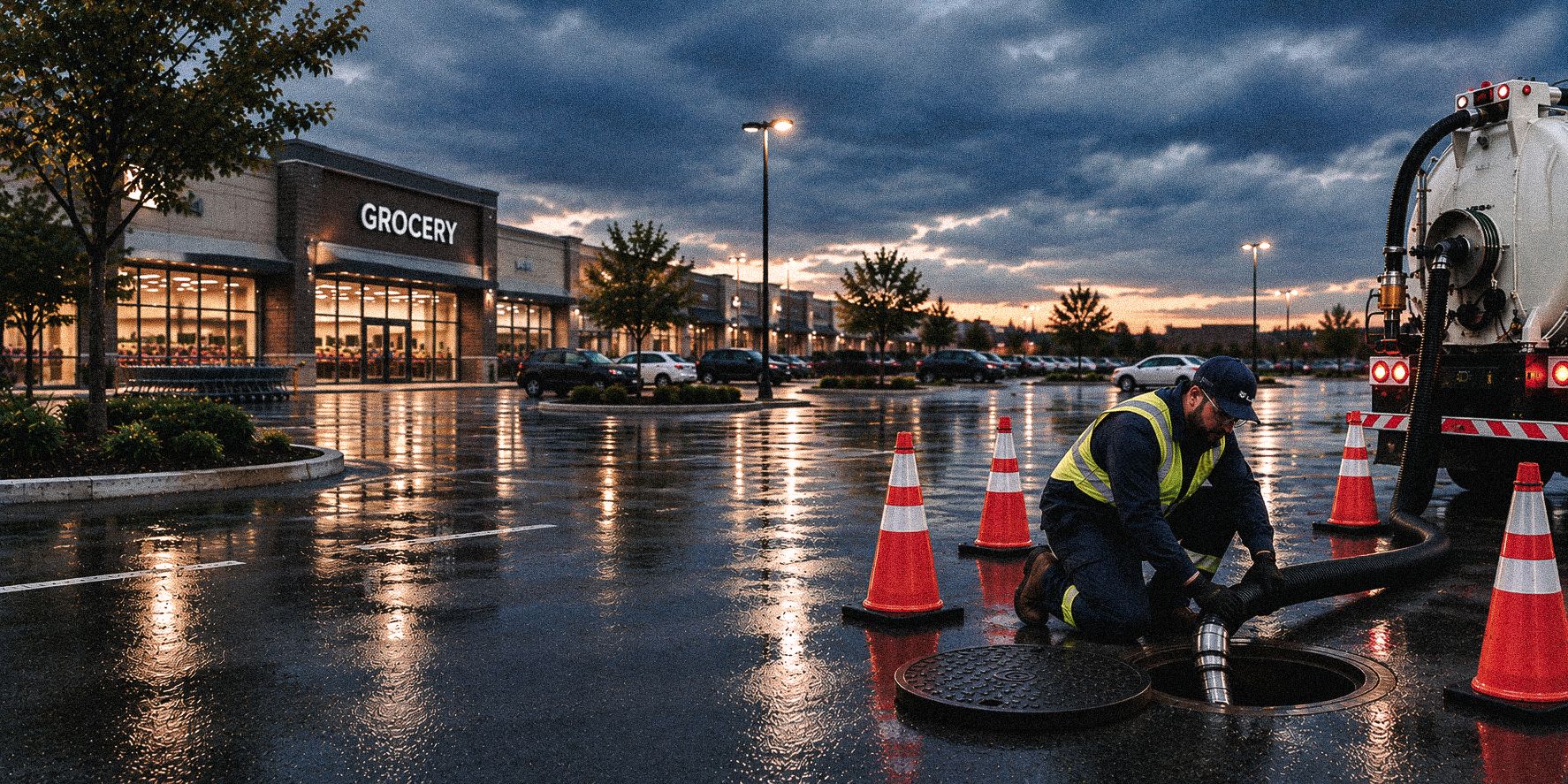
Cleaned, Documented, and Reported. Not Just Pumped.











A stormwater separator only works while there is room left in the sump. Once sediment, grit and oil fill it, the unit stops treating runoff. It starts passing pollutants straight through, usually with no sign at ground level.
Liquid Environmental Solutions (LES) inspects, cleans and reports on your stormwater separators. We vacuum them out and dispose of the waste under license. We service hydrodynamic, mechanical and oil-grit separators, plus water quality units.
From one retail site to a national portfolio, LES gives you one responsible partner. You get recorded inspections, full cleanouts and manifested disposal through our own recovery network. You also get the maintenance records your city asks for.
Stormwater separators are built to be forgotten. They sit underground, they have no alarm, and nothing on the surface shows that the sump is full.
Left alone, an overloaded separator stops removing sediment and oil. In heavy flow, it can even wash trapped material back out. The device is still there. It just isn’t doing anything.
Here’s what that leads to: a failed city inspection, a maintenance record you can’t produce and a Notice of Violation. In some areas, it can also mean a hold on other permits until the problem is fixed.
LES does more than pump the unit.
Every scheduled service is also a recorded inspection. We measure sediment depth, check internal parts and baffles, record the condition and report findings to the right person.
No two separators fill at the same rate. Drainage area, surface type, traffic, fueling, landscaping and local rainfall all change how fast the sump fills.
LES looks at the unit, the site and the rules that apply. Then we build a service schedule around real buildup, not a default cycle used at every location.
Whether you manage one property or several hundred, you get the same service standards and records in one place. Maintenance is timed to keep the unit working, not to fill a calendar slot.
The 50% rule is the one that matters. Most manufacturers and cities treat a half-full sump as the signal to clean it out, no matter how recently it was serviced.
Removing the sediment meets today’s requirement. The real value comes from the record that proves it, and from catching a structural problem before it needs a replacement. Every scheduled visit follows the same closed-loop process.
01
Measure sediment and liquid depth against sump capacity. Check baffles, weirs, openings and reachable internal parts for damage, shifting or blockage.
02
Remove built-up grit, sand, sediment, trash and debris from the sump with vacuum equipment sized for the unit.
03
Skim and remove trapped oil, grease and floating fuel held in the separation chamber.
04
Wash down internal parts as the unit design allows. Then confirm the sump is clear and the device is back to working as designed.
05
Haul collected material on a licensed manifest to an LES facility for processing and recovery. We don’t send it to a third party we don’t control.
06
Give you sediment readings, condition notes, photos and disposal manifests. Plus the maintenance record your city requires.
Many separator manufacturers maintain their own units. That works fine until your sites have four different systems, installed by four different developers over twenty years.
LES services hydrodynamic and mechanical separators no matter who built them. That includes the major proprietary brands, oil-grit units, and unbranded cast-in-place structures.
You get one provider, one schedule, and one report format for every device on every site, whatever is in the ground.
Most stormwater separators are installed because a permit required them. Most are serviced because a permit requires that too.
Under MS4 stormwater programs, cities require owners of these treatment devices to maintain them and keep records. Many require an inspection form on a set cycle.
Rules vary by city, county and state. A multi-site portfolio often spans several at once.
LES tracks the rules that apply to you through FOGLaw®. Our platform covers more than 6,000 federal, state and local regulations. We produce the records each local area expects.
The result: your records are ready before the inspector asks. And one partner answers for the whole program.
A separator cleanout produces grit, sediment, sludge, and oily liquid. That material is regulated, so it needs proper hauling and a documented disposal trail.
A typical vacuum contractor pulls it from your site and then has to find somewhere to take it. Once the truck leaves, you often lose sight of where it goes.
LES works differently. Where we have facilities nearby, your waste travels on an LES manifest to our own plant, where we clean and process it so it can go back into the circular economy. Elsewhere, we partner with trusted facilities nationwide and make sure every load is tracked and documented.
525M+ gallons recycled a year
Our network recycles more than 525 million gallons each year. For you, that means one accountable partner from the moment waste leaves the sump, with a clear record of where it went.
Separators can break, not just fill up. Baffles shift. Weirs crack. Inlet and outlet pipes pull apart at the joint. Access risers settle. A unit like that can be pumped clean and still fail its next inspection, because it no longer treats the flow it was built for.
So these problems show up as a maintenance item with a photo, not as a finding on someone else’s report.
That helps you:
Sediment readings, photos and manifests. Plus the maintenance record your city needs.
Stormceptor, Vortechs, CDS, StormTrap, oil-grit units and unbranded structures. One provider for all of them.
Waste hauled on an LES manifest to an LES facility. No gap in the chain of custody.
Shifted baffles and failed parts show up as repairs, not as inspection findings.
The same service and reports at every property you manage.
LES runs 90+ facilities and 1,000+ trucks and tankers nationwide. Find service and local rules for your area:
Most separator problems can’t be seen from the surface. Someone else usually finds them.
LES can inspect your units and measure real buildup against sump capacity. We review your maintenance records and local rules. Then we build a service schedule that keeps each device working and each file complete.