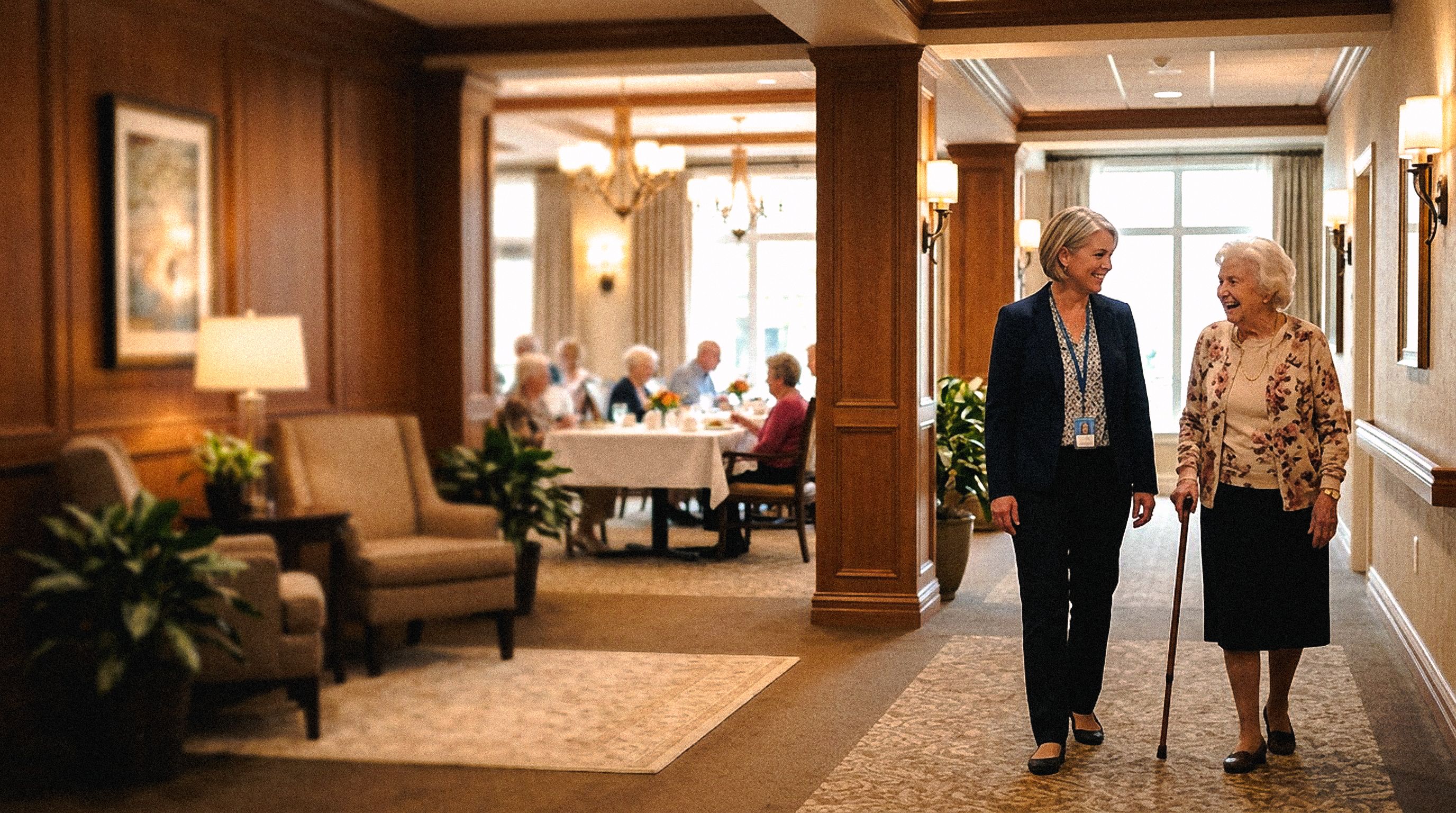
Your executive director is a caregiver, not an engineer. We don’t expect them to spot a failing grease trap.
Grease traps, drain lines and separators in every community you run. Inspected at every visit, flagged before they fail, and documented building by building.










In a restaurant, somebody notices the drain running slow.
In a senior living community, the person nearest the kitchen is running a building full of residents. They have no reason to look at an interceptor.
So the problem grows quietly between visits. Then the dining room closes on a Tuesday, and a family member is the one who mentions the smell.
LES treats every scheduled service as an inspection. Technicians photograph what they find, flag growing problems to your regional team, and quote the repair. Every building, one standard, one record.
Request a Portfolio Assessment

- customer locations served
- 129,500+
- facilities nationwide
- 90+
- trucks and tankers
- 1,000+
- on-time service
- 95%
- of material recycled
- 94%
- water treated annually
- 525M+ gal
Small buildings fail quietly.Every visit we make is also an inspection.
A senior living portfolio is not one large system. It is dozens of small ones spread across markets. None has anyone on site whose job is to watch it.
Four systems in every community.None of them has a watcher.
Kitchen, dining, laundry and grounds — every system LES services, inspected at every visit.
Dining room
Three meals a day
Kitchen drain lines
Cleaned before buildup blocks them
Laundry graywater
A stream restaurants don’t produce
Outdoor grease interceptor
Pumped, cleaned and inspected
Find out what every building needs before it fails.
Grease traps, drain lines and separators in every community you run. Inspected at every visit, flagged before they fail, and documented building by building.
The dining room is not a cafeteria.It is the center of the building.
Residents live here. Meals shape their day and are a large part of what families pay for. In that setting, an odor or a closed dining room is more than a maintenance issue.
Scheduled around meal service
Three meals a day, plus activities and visiting hours. We plan work so it doesn’t cut through the middle of a resident’s day.
Day and night routes
LES runs both. So service can move outside busy hours when that is better for the building.
Odor kept to a minimum
In memory care most of all, disruption and odor reach the residents least able to move away or explain what is wrong.
Discreet access and routing
We route service through back-of-house and loading areas, not resident common spaces, wherever the building allows.
Credentials handled up front
Badging, background checks and vendor sign-up are handled once during onboarding — not for each building.
Every building has a different vendor, and nobodyknows when Building 14 was last serviced.
Here is everything we cover.
Full pump-out and cleaning of kitchen traps and interceptors, under-sink and outdoor.
Collection and recycling from community kitchens. Sized for smaller volumes than a restaurant program.
Cleaning kitchen and facility drain lines before buildup blocks them.
Broken baffles, structural damage, and resizing when dining has outgrown the original unit.
Separators and catch basins at parking areas, loading docks and transport vehicle bays.
Laundry graywater and floor scrubber water.
Hauled to LES facilities and processed. 94% of what we collect is recovered for reuse.
We photograph and report the condition, baffles, structure and any growing issues to your regional team.
Manifests and service records for each building, kept in an online portal and reportable across your portfolio.
One vendor, one standard, one record for every community.
LES treats every scheduled service as an inspection. Every building, one standard, one record.
The enzyme product your kitchen buys makes things worse.Here is what actually reduces grease.
This problem looks like a service issue, but it isn’t. Enzyme and bacteria products are sold to break down grease in the trap. They do just that. They break the FOG into tiny drops so it stops separating. Then it flows out of the interceptor in the water. It cools and hardens again in the sewer line past your property.
The clog forms somewhere you don’t own. The first you hear of it is from the city.
It also ruins the oil layer that could be recycled. That layer is what gives a well-run interceptor its value at the other end.
Every LES visit includes an inspection, not just a pump-out. When it helps, we’ll point out kitchen habits worth a second look:
Stop dosing enzymes and emulsifiers
Hot water flushes, enzymes and soaps used to “dissolve” grease push the problem downstream and make the oil impossible to recycle.
Dry-scrape before washing
Train dining and kitchen staff to scrape plates, trays and pans into the trash before washing. It is the cheapest place to stop grease.
Watch the 25% rule
Service the trap before grease and solids together fill a quarter of the tank. Past that point, FOG escapes into the city sewer.
Size the interceptor to the kitchen
Large outdoor interceptors with several chambers separate grease far better than small under-sink units — and leave a cleaner, recyclable oil layer.
Send floor and mop water to the right drain
Floor cleaning water should drain only into drains connected to an interceptor. Water often skips it by mistake.
The state surveyor arrives without notice.So does the family member who notices first.
Senior living communities are licensed and inspected by the state. Those checks cover sanitation and facility maintenance records. Records pulled together after they ask are not the same as records that were already there.
We leave a manifest copy on site at every visit. Final manifests, with disposal details, are kept in an online portal — sorted by building and reportable across your portfolio. So a regional manager can answer for any community without calling the local vendor.
Four Things to Check Before You Hire Any Waste Hauler.Here Is How We Answer Each One.
You add buildings faster than you add vendors.Your program should grow without a rebuild.
One service standard across every community
The same documented process in each building. Done by LES team members in LES trucks, not handed off to whoever is local in that market.
One chain of custody
Every gallon tracked from the community, on LES trucks, to an LES processing facility. Documented for each building.
Portfolio-wide reporting
Service history, volumes and compliance records across every community. Nobody has to piece them together from invoices when a survey starts.
Schedules still set for each building
A 60-unit assisted living community and a 200-unit CCRC with three dining rooms are not the same site. One vendor doesn’t mean the same schedule everywhere.
New buildings join the same program
New communities are assessed, measured and brought onto the same standard. They don’t keep whatever deal came with the purchase.
You will need another provider for some of this.Here is exactly what.
LES is a non-hazardous liquid waste company. In a care setting, that line matters. So we state it plainly instead of hiding it.
LES handles
- Kitchen grease interceptors: pumping, cleaning, repair, replacement, installation
- Used cooking oil collection and recycling
- Drain line cleaning and hydro jetting
- Oil-water and stormwater separators, catch basins
- Graywater, floor scrubber water, blowdown
- Lift stations and wet wells
- Compliance records and recycling
LES does not (use a licensed specialist)
- Regulated medical waste, red bag waste, and sharps
- Body fluids, including blood, urine, and secretions
- Dialysis effluent
- Hydrotherapy, whirlpool, and burn unit water
- Expired saline, IV fluids, and pharmaceutical waste
- Hazardous waste of any classification
- Solid waste, refuse, and recycling hauling
Keep the dining room open and the record clean.
Traps, drains and separators in every community. Inspected at every visit, flagged before they fail, and documented building by building.
- Every community assessed against local rules
- Schedules set around meals and trap size
- Records ready before a surveyor asks
What happens next
- We review your sites, systems, service history and local rules.
- We show you where the risk is — before it becomes an emergency.
- You get one program, one standard and one record for every site.
24/7 emergency service for current customers
Frequently Asked Questions
Can’t find what you need? Talk to a specialist about your sites.
Talk to an Expert