

Every Vendor Promises Compliance. We Tell You What Happens When We Get It Wrong.
FOGLaw® tracks the rules that apply to each of your locations. Your service schedule is set by both the rules and what your site really produces. Every service follows a documented process. And if an LES error causes a qualifying emergency service or Notice of Violation, LES covers the associated cost in accordance with the guarantee.
- Lock 1FOGLaw® tracks the rules
- Lock 2The right schedule
- Lock 3Seven documented steps
Compliance guarantees are common in this industry. Most of them mean nothing. They promise a result no vendor controls. Then they vanish into a sales deck, with no terms anyone can read.
The TripleLock Compliance™ Guarantee is built the other way around. Three day-to-day commitments lower the chance of a violation. And one financial commitment for when an LES error causes one anyway.
The Rules Change by City, and Nobody Tells You When.
Grease and liquid waste rules are set by the state, the city and the sewer authority. Service frequency, recordkeeping, discharge limits and inspection expectations can all differ between two sites forty minutes apart.
For one site, that is manageable. Across many sites, it turns into a research job nobody on a facilities team has time for. And it fails silently. A rule changes, nothing looks different, and the violation arrives months later.
40 min apart
Service frequency
Recordkeeping
Discharge limits
Inspection expectations
TripleLock Compliance™ turns all of that into one managed program. Three locks, backed by a guarantee.
Lock 1
Lock 1: FOGLaw® Tracks the Rules So You Don’t Have To.
FOGLaw® is LES’s own regulatory database. It tracks more than 6,000 federal, state and local requirements. It matches them to the local areas where your locations sit.
When a requirement changes, we identify the locations it affects. Then we update their service program to meet the new requirement. You don’t hear about it after a violation. The program changes first.
6,000+
federal, state and local requirements
A requirement changes
Affected locations identified
Service program updated
Before a violation
What it tracks
Service frequency rules, recordkeeping and manifest duties, discharge and FOG limits, and inspection expectations, by local area.
What you receive
A service program that meets the requirements at each location, and records in the form those requirements expect.
You don’t have to read the city code. We already did.
Lock 2
Lock 2: The Right Schedule, Not the Standard One.
Your service schedule is set from two things: what the rules require at that location, and how much waste that location actually produces.
Most programs use only the first, or neither. So a busy kitchen and a quiet site end up on the same schedule. One risks an overflow. The other pays for service it doesn’t need.
-
Input 01
What the rules require
What it decides
The minimum frequency and records the local rules expect at that address.
-
Input 02
Measured waste output
What it decides
What the system actually takes in, based on service history and what we see on site, not a guess based on the type of business.
-
Input 03
Interceptor size and layout
What it decides
How much it holds, how its chambers are designed, and how much room is left before it stops working well.
-
Input 04
How your operation changes over time
What it decides
Menus, hours, occupancy and volume change. We review the schedule as they do.
25%
The 25% guide
A widely used guide is to service the trap before grease and solids together fill a quarter of the tank. Past that point, FOG starts escaping into the city sewer, no matter what the schedule says.
Lock 3
Lock 3: Seven Documented Steps, Done the Same Way Every Time.
Every grease trap service follows the same documented process, in the same order, in every market. It is designed to fully pump out and clean the trap. Not skim the surface and leave.
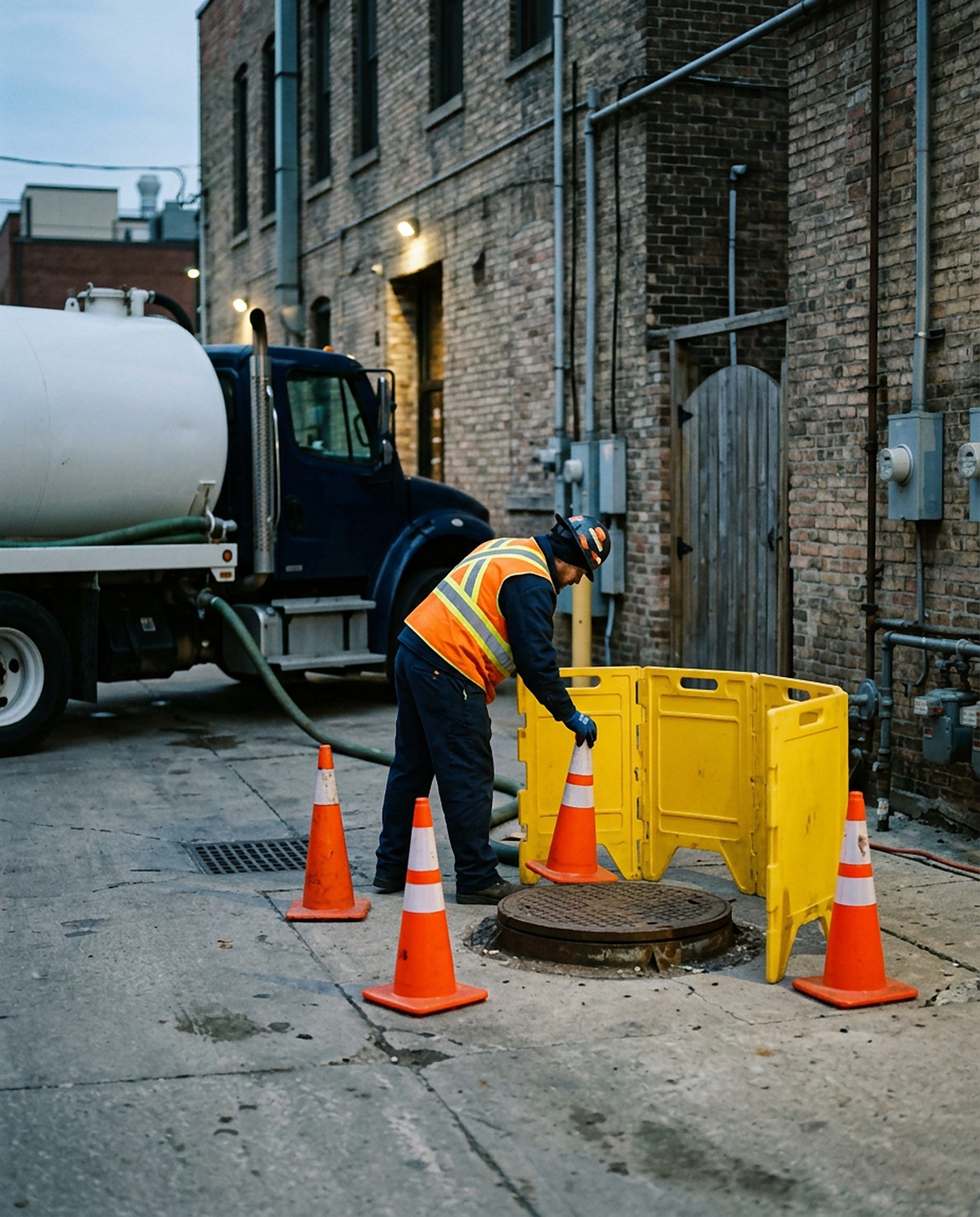
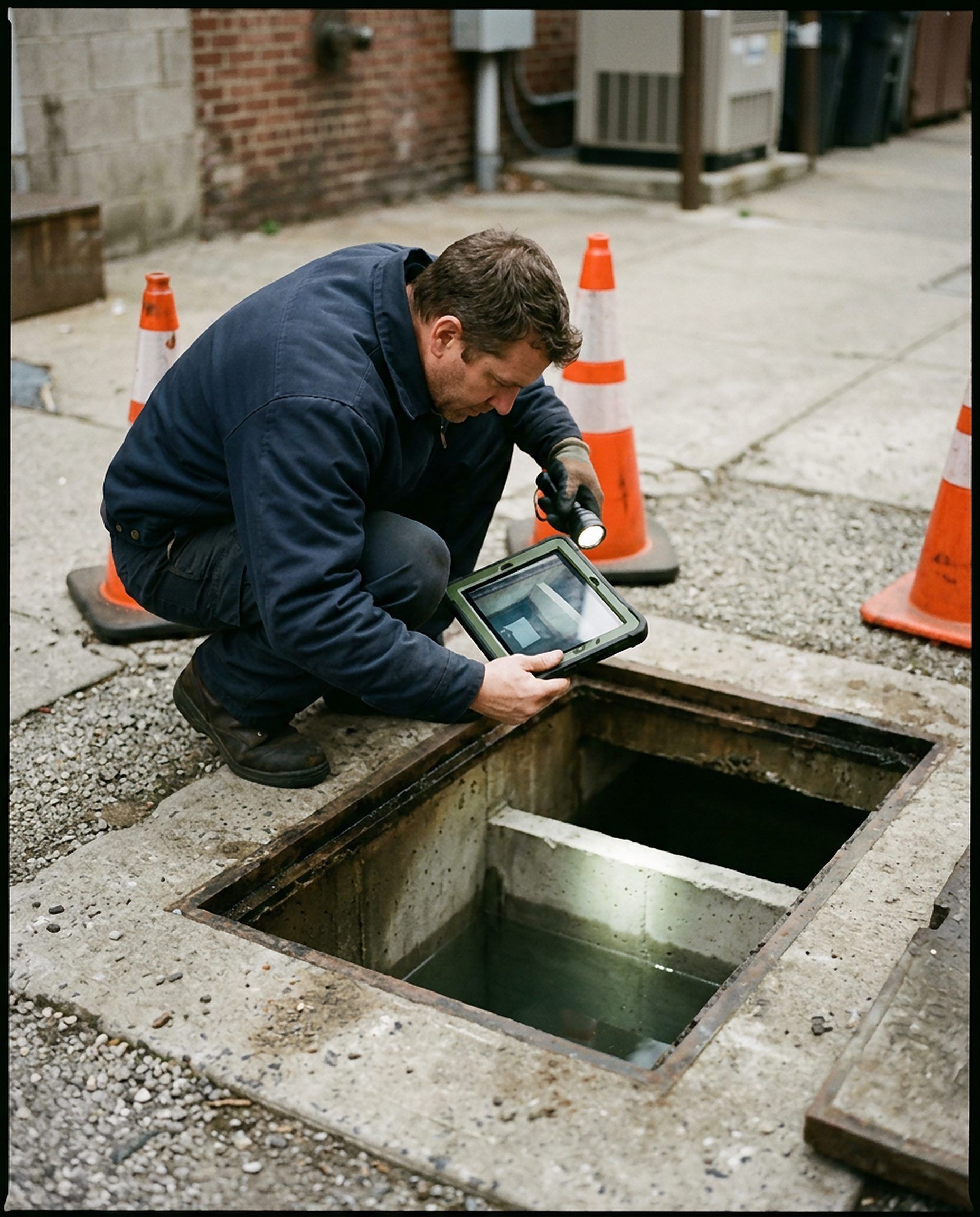
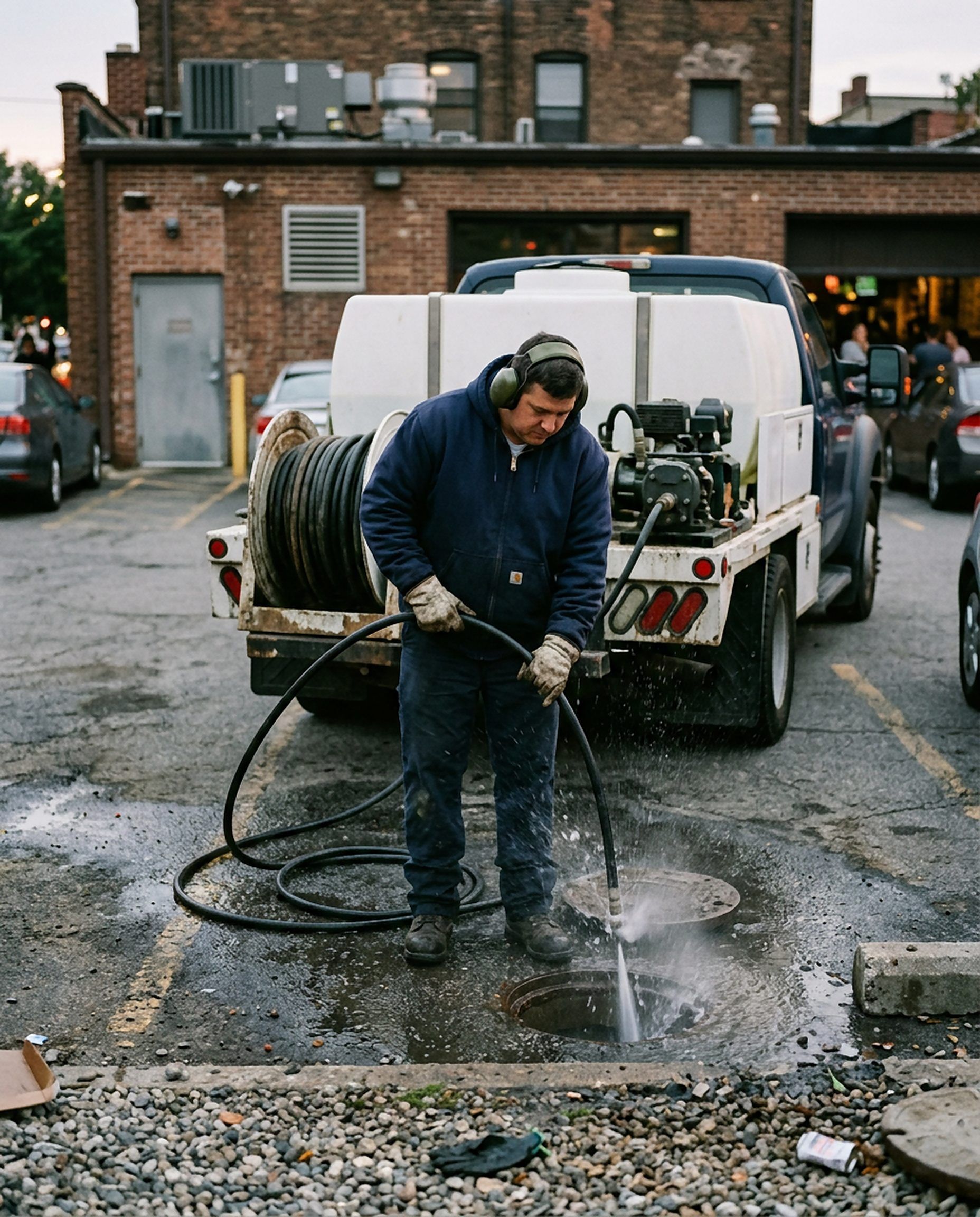
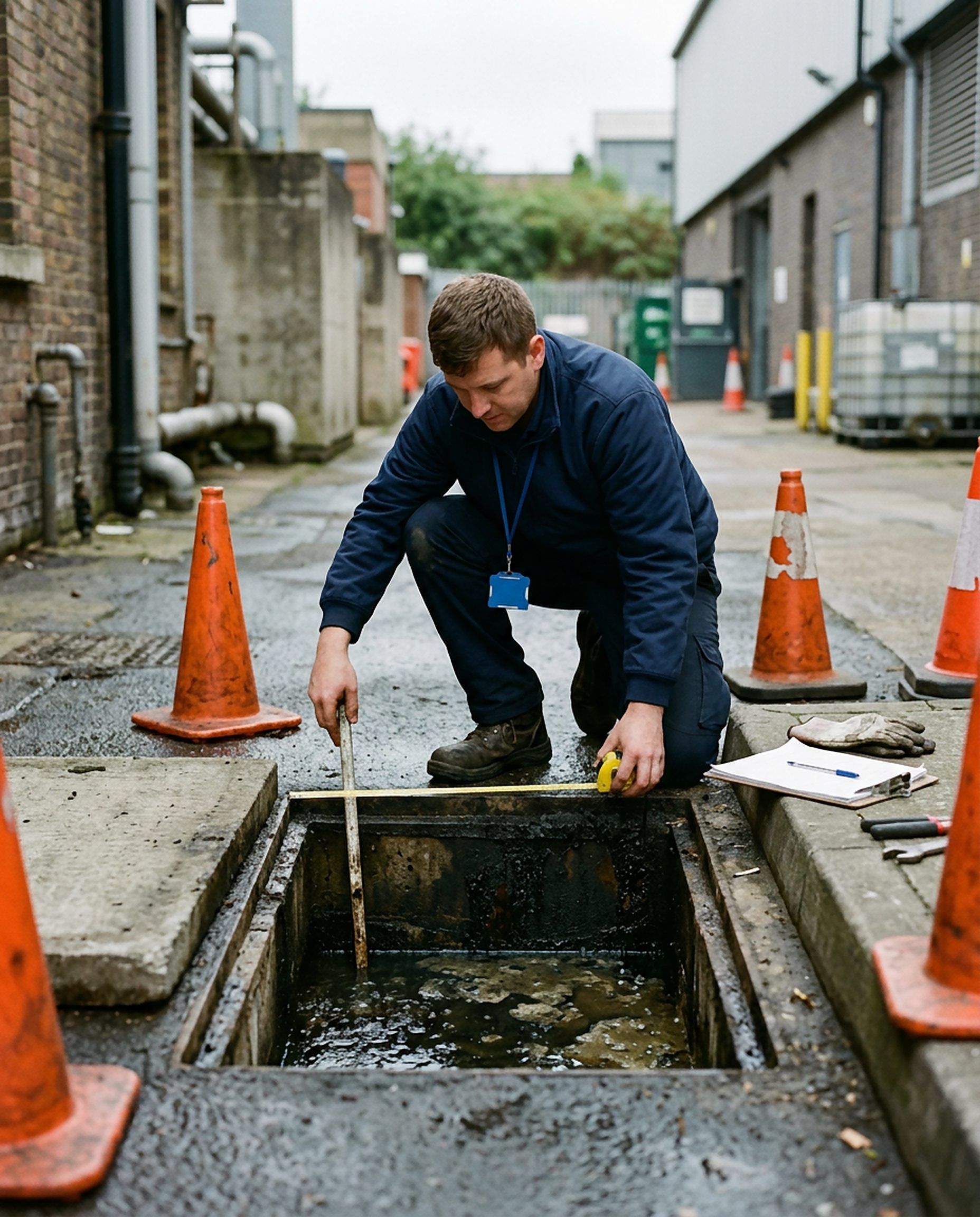
Cones and barriers go up around the access point before the cover comes off. They stay in place until the work is done.
Why it matters
An open interceptor in a service yard, a parking lot or behind a kitchen is a hazard to staff, customers and our crew. Work doesn’t start until the area is closed off.
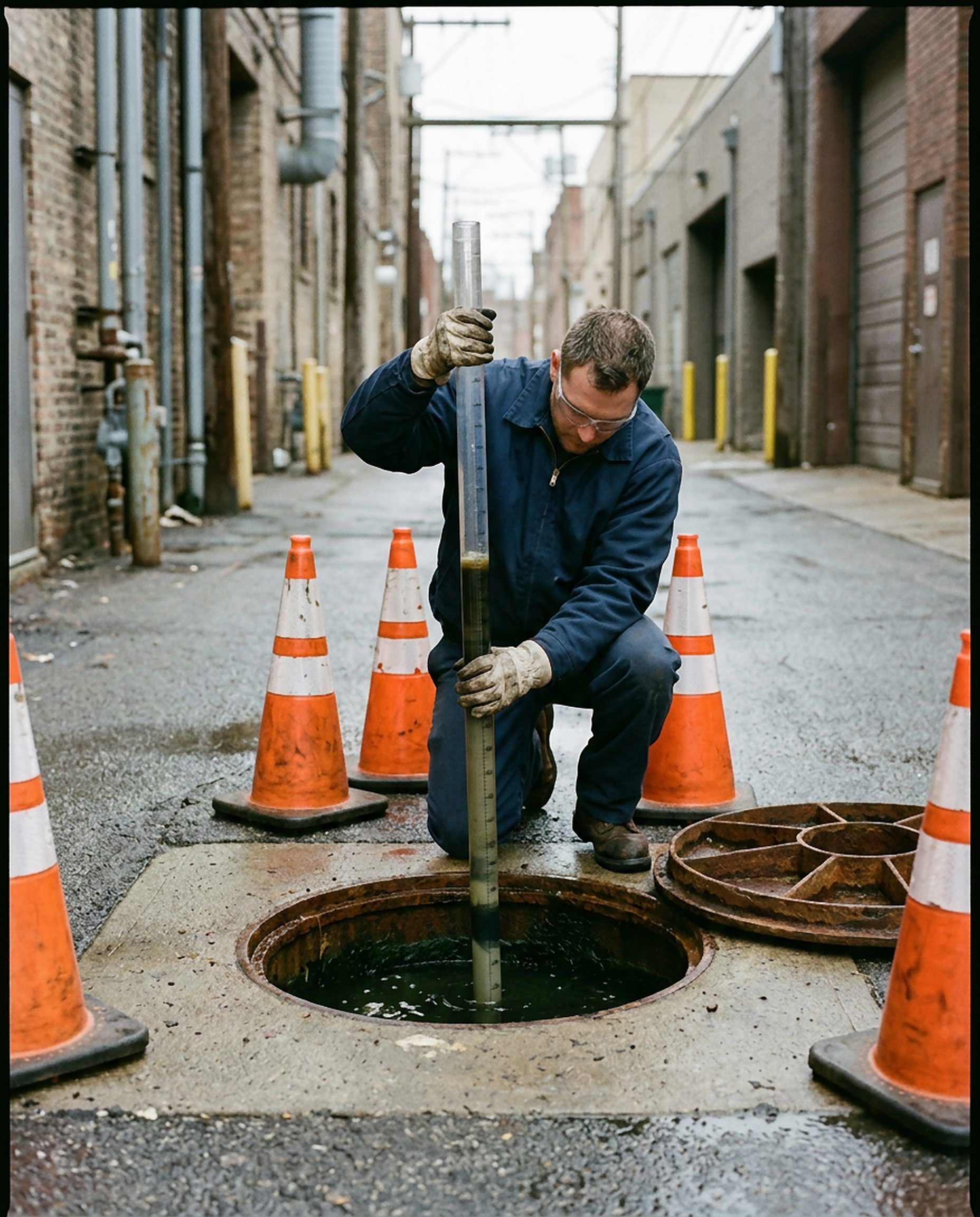
We measure the depth of FOG and solids with a Sludge Judge before any pumping starts.
Why it matters
This shows how full the interceptor really was when we arrived. That number tells us whether your service schedule is right.
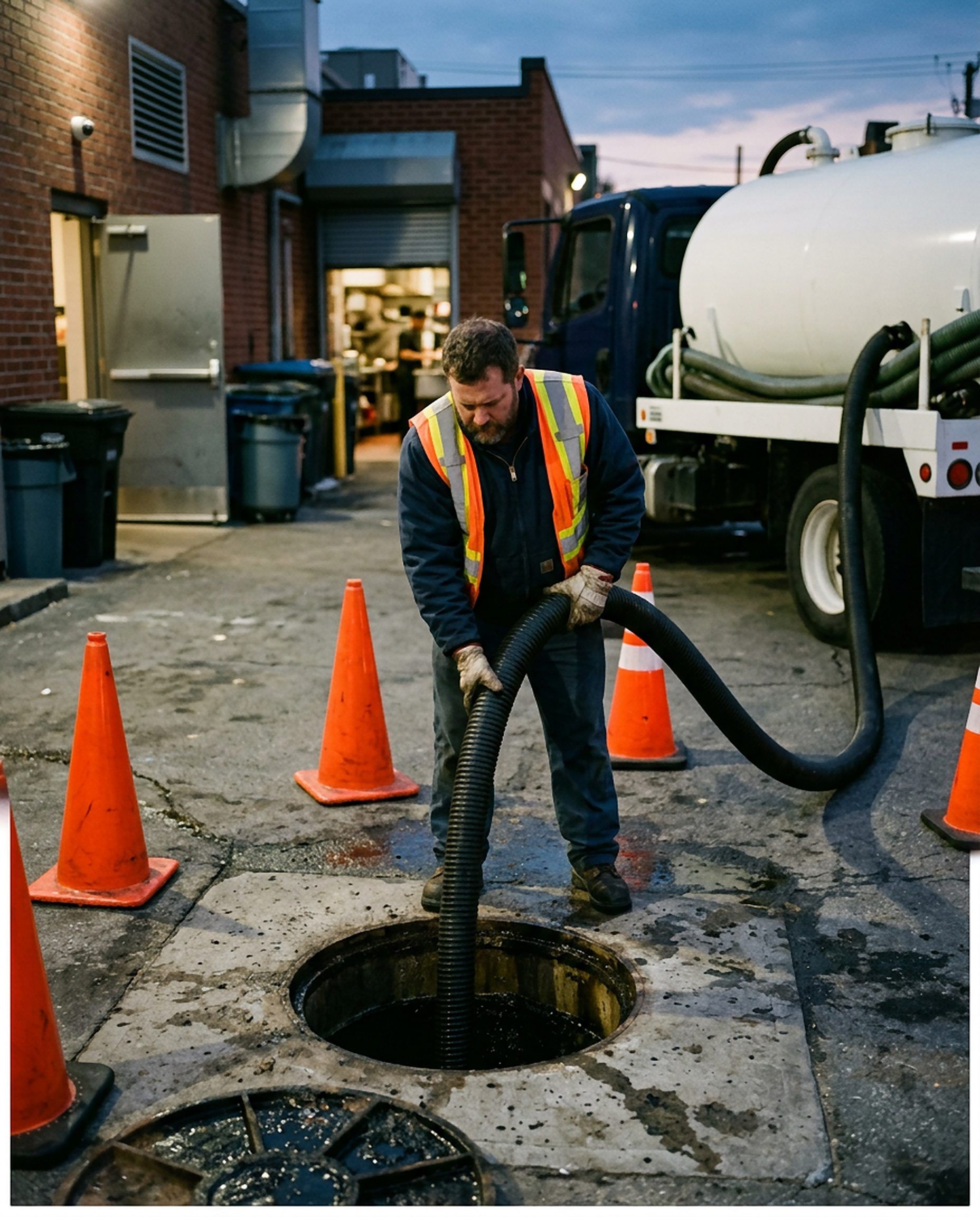
The full contents removed. No shortcuts, no partial pump-outs.
Why it matters
Removing only the top layer leaves solids and sludge behind, which cuts capacity. It is the most common reason a serviced trap still fails.
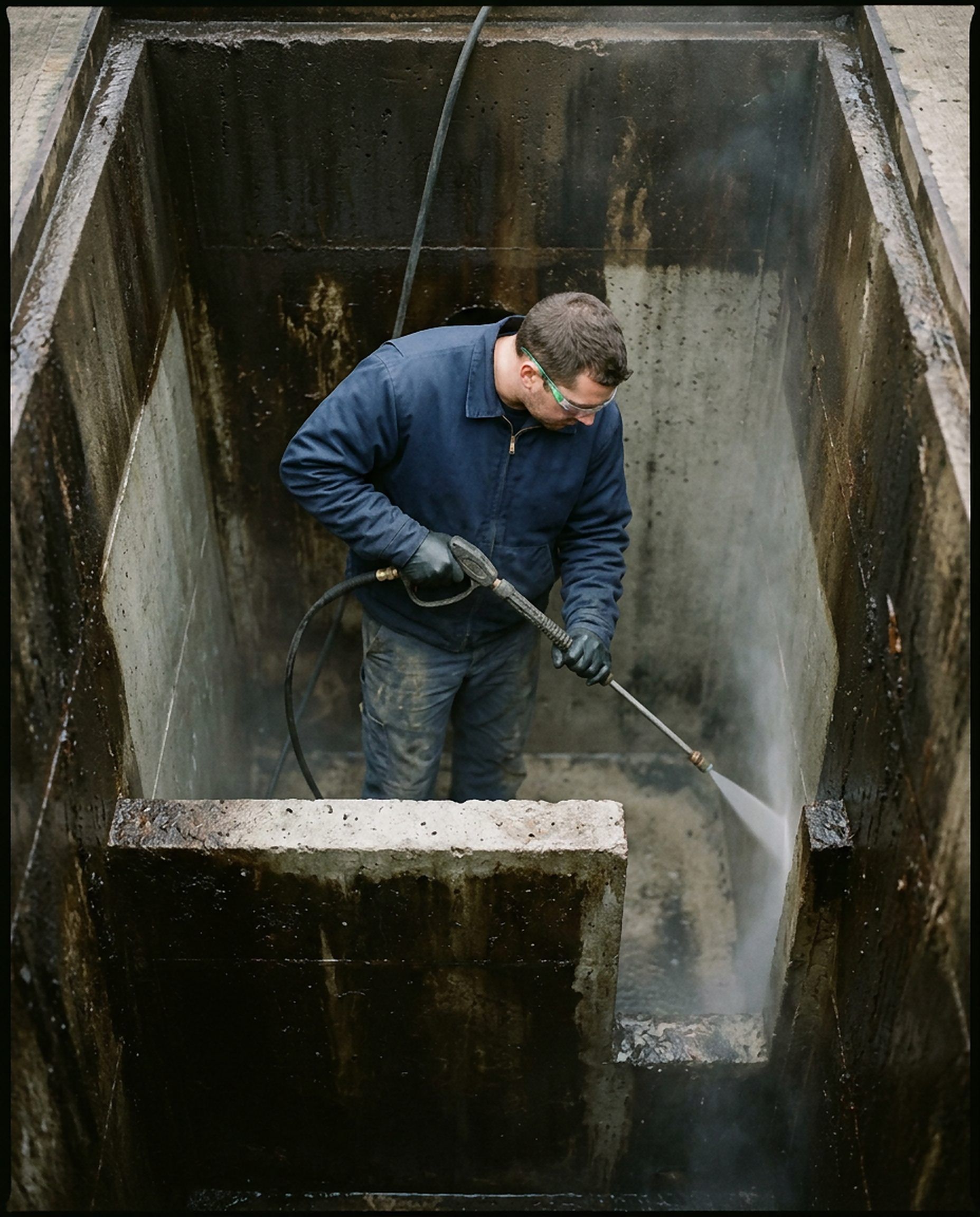
Walls, baffles and surfaces are washed and scraped back to working condition.
Why it matters
An empty trap is not a clean trap. Hardened buildup keeps hurting performance after the truck leaves.
Baffles, structure and any growing issues are inspected, photographed and logged.
Why it matters
This step turns a pump-out into an early warning. Findings reach your team while a repair can still be planned.
Outdoor lines downstream are jetted when they need it.
Why it matters
A clean trap that drains into a blocked line still backs up. Jetting reaches the part of the system a pump-out can’t.
We confirm the interceptor’s actual capacity against what is on your account record.
Why it matters
Billing and service frequency should match the equipment in the ground, not whatever the account record was handed down.
The same steps, in the same order, in every market we serve.
Every visit creates a service record. Photos, manifests and inspection findings show what was done and what was found.


Guarantee
If an LES Error Causes It, LES Covers It.
The three locks lower the chance of a compliance failure. The guarantee deals with what happens if one occurs anyway because of something LES did.
If an LES error causes a qualifying emergency service or Notice of Violation, LES covers the associated cost in accordance with the guarantee.
- FOGLaw®
- Schedule
- Seven steps
The three locks are what make that commitment possible. FOGLaw® means the rule is known. The schedule means service happens before the rule is broken. The seven steps mean service is done the same way every time, and documented when it is.
The full terms are in your LES service agreement.
Request Full TermsWhat This Guarantee Is Not.
Stating the limits plainly is what makes this a commitment, not a slogan.
It does not guarantee that you will pass every inspection
No vendor controls how an inspection turns out. Inspections look at conditions and practices across your whole operation. Most of those sit outside a liquid waste program.
It does not cover violations LES did not cause
That limit is the whole design. If the cause is your own operations, practices at the source (what goes into your system), or pre-existing infrastructure, the guarantee does not apply.
It is not legal or regulatory advice
FOGLaw® tracks requirements and lines up your service program to meet them. It does not replace your own compliance duties or your legal counsel.
See how your current program would hold up.
LES will review your locations, service history, schedules and records against the rules that apply to each site. Then we will show you where the gaps are.