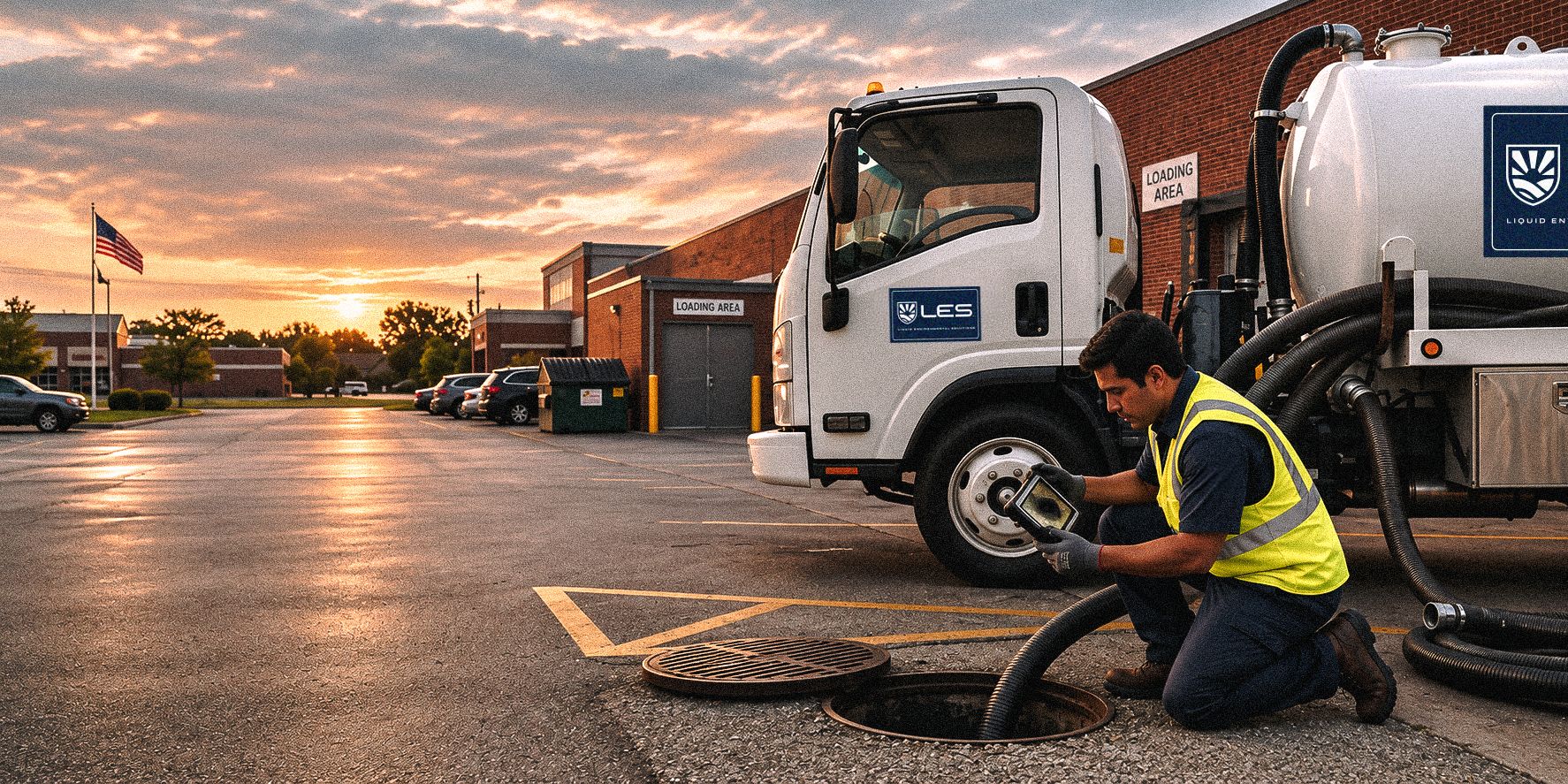
Every Location Serviced. Every Problem Flagged Then Resolved. Every Gallon Accounted For.
An LES program does more than empty your grease traps and separators. We inspect the system, record what we find, flag problems early and arrange the repair. At every location, to one standard.










- customer locations served
- 129,500+
- trucks and tankers
- 1,000+
- facilities
- 90+
- of collected material recycled
- 94%
What an LES Solution Really Includes
Most liquid waste contracts buy you a truck on a schedule. That is a pickup, not a program.
An LES solution covers five things at every location.
The regulations tracked, location by location.
Requirements vary by state, municipality, and sewer authority. FOGLaw®, our proprietary regulatory database, tracks the requirements that apply to each of your sites and keeps the program aligned as those requirements change. You do not have to read the municipal code. We already did.
Service at the right interval.
Intervals are set from two inputs: what the regulations require at that site, and what that site actually generates. A high-volume kitchen and a low-volume location should not be on the same schedule. One risks an overflow. The other pays for service it does not need.
A documented inspection, every visit.
Technicians inspect the relevant infrastructure, photograph conditions, and record findings. Not just the trap — the lines, components, and capacity around it.
Repair coordination.
When something is deteriorating, LES quotes the repair and coordinates qualified resources to complete it. You are not handed a problem report and a list of contractors.
Documentation you can produce on demand.
Online manifests, service records, photos, and resource-recovery reporting, organized by location. Every grease trap service follows a documented seven-step process designed to fully evacuate and thoroughly clean the trap. Not skim the surface and go.
All five are backed by the TripleLock Compliance™ Guarantee.
FOGLaw® tracks the rules. We set your schedule to both the rule and what your site really produces. Every service follows a seven-step process on record. If an error by LES causes a qualifying emergency service or Notice of Violation, LES covers the associated cost in accordance with the guarantee.
Three locks. One partner you can count on. Compliance backed by real consequences.
Find It. Flag It. Fix It.
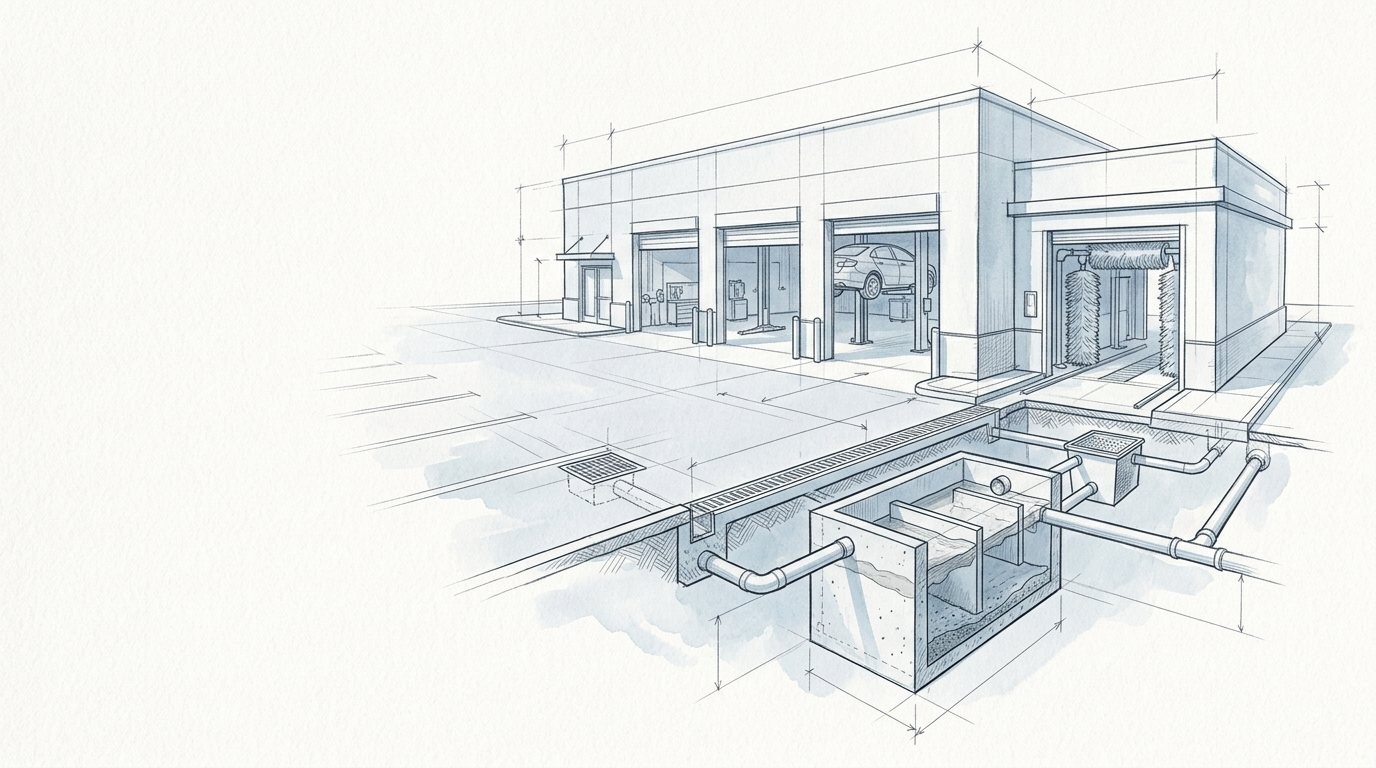
A clean grease trap tells you nothing about the cracked line feeding it or the failing baffle inside it.
If no one is looking, the problem is still there after the truck leaves. Months later it becomes an overflow, an after-hours call or a closed location.
 Cracked lineFailing baffle
On recordStep 01:
Find It.
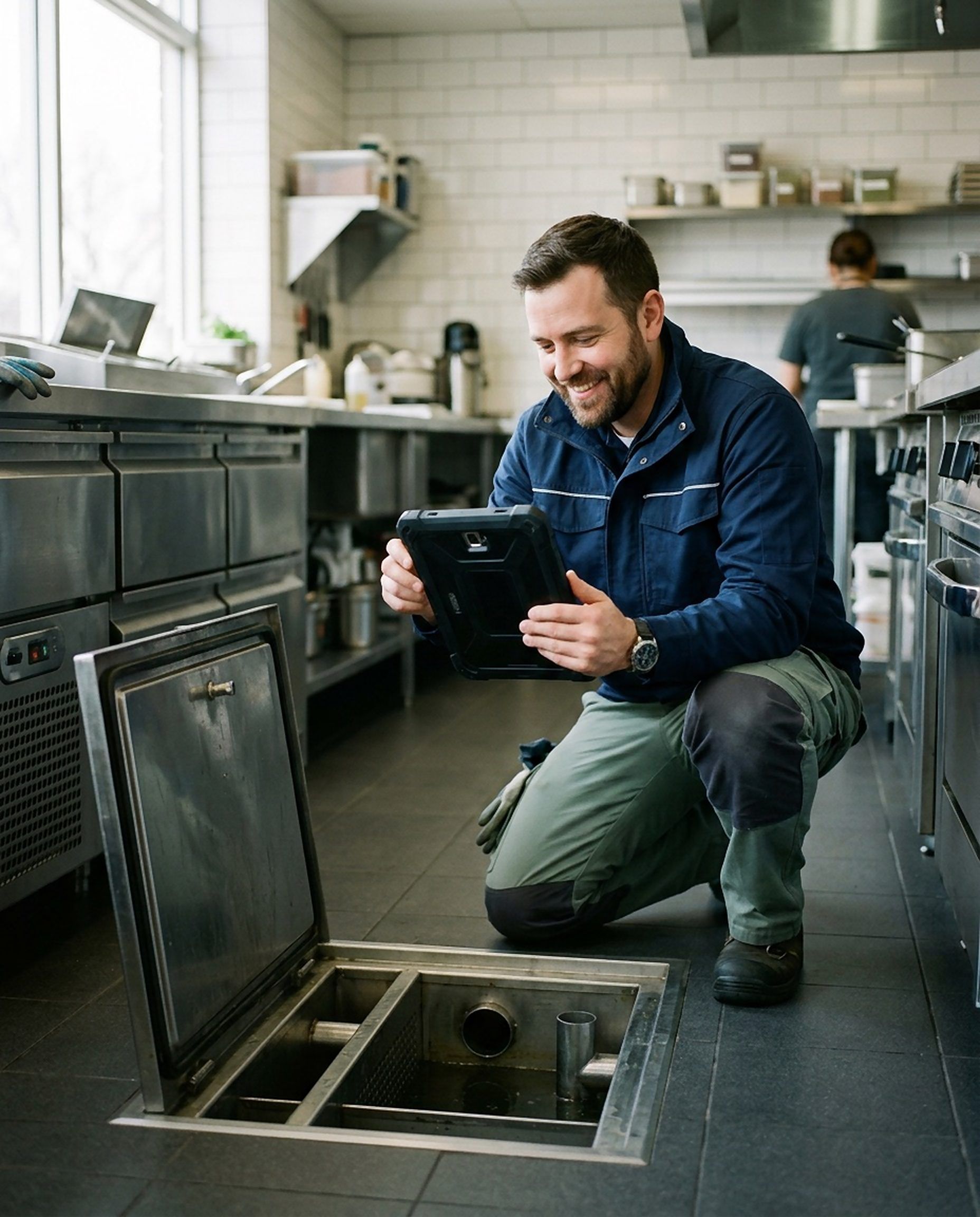
Every scheduled service includes an inspection on record. We photograph conditions and write down what we find.
- Issue flaggedSent to your teamPlan it
 Baffle wear foundPhotos + details attachedStep 02:
Flag It.
We report problems to your team with photos and details, while the fix can still be planned maintenance.
- Repair planRepair quoted Qualified crew booked Planned maintenanceStep 03:
Fix It.
LES quotes the repair and lines up qualified crews to do it.
One national grocery chain moved from calling for help after problems to a managed LES program. Across its stores, emergency calls dropped 75%, and 95% of services were done on time.
Contact LES Today75%
fewer emergency calls
95%
services done on time
The Lowest Price Per Service Is Not the Lowest-Cost Program
A cheaper pump-out saves money on the bill. One overflow wipes out a year of those savings.
One emergency service can cost as much as a year of scheduled preventive service. Add the after-hours charge, the lost business hours, the emergency plumber and the fine. Now the cheap vendor is the expensive one.
One emergency service
- Service
- After-hours
- Lost hours
- Plumber
- Fine
A year of scheduled preventive service
≈ the same total
What a preventive program is built to avoid:
- Emergency service calls and after-hours charges
- Overflows, odor complaints and business disruption
- Compliance violations and shutdowns you could have prevented
- Repairs that cost more because they were caught too late
- Replacing equipment before its time
- Several vendors blaming each other for one problem
The goal is not more service. It is the right service, at the right time, before the costly call happens.
The TripleLock Compliance™ Guarantee
Rules vary by state, city and sewer authority. For a business with many sites, every location can have a different rule.
- Lock 1
FOGLaw® tracks the rules.
Our database tracks the rules for each location. It helps keep your program up to date as they change.
- Lock 2
The right schedule, not the standard one.
We set it from the rules and the actual waste at each site.
- Lock 3
Seven steps, on record.
Every grease trap service follows a seven-step process on record. It is built to fully pump out and clean the trap.
If an error by LES causes a qualifying emergency service or Notice of Violation, LES covers the associated cost in accordance with the guarantee.
Three locks. One partner you can count on. Compliance backed by real consequences.
See the Full GuaranteeFind Your Industry
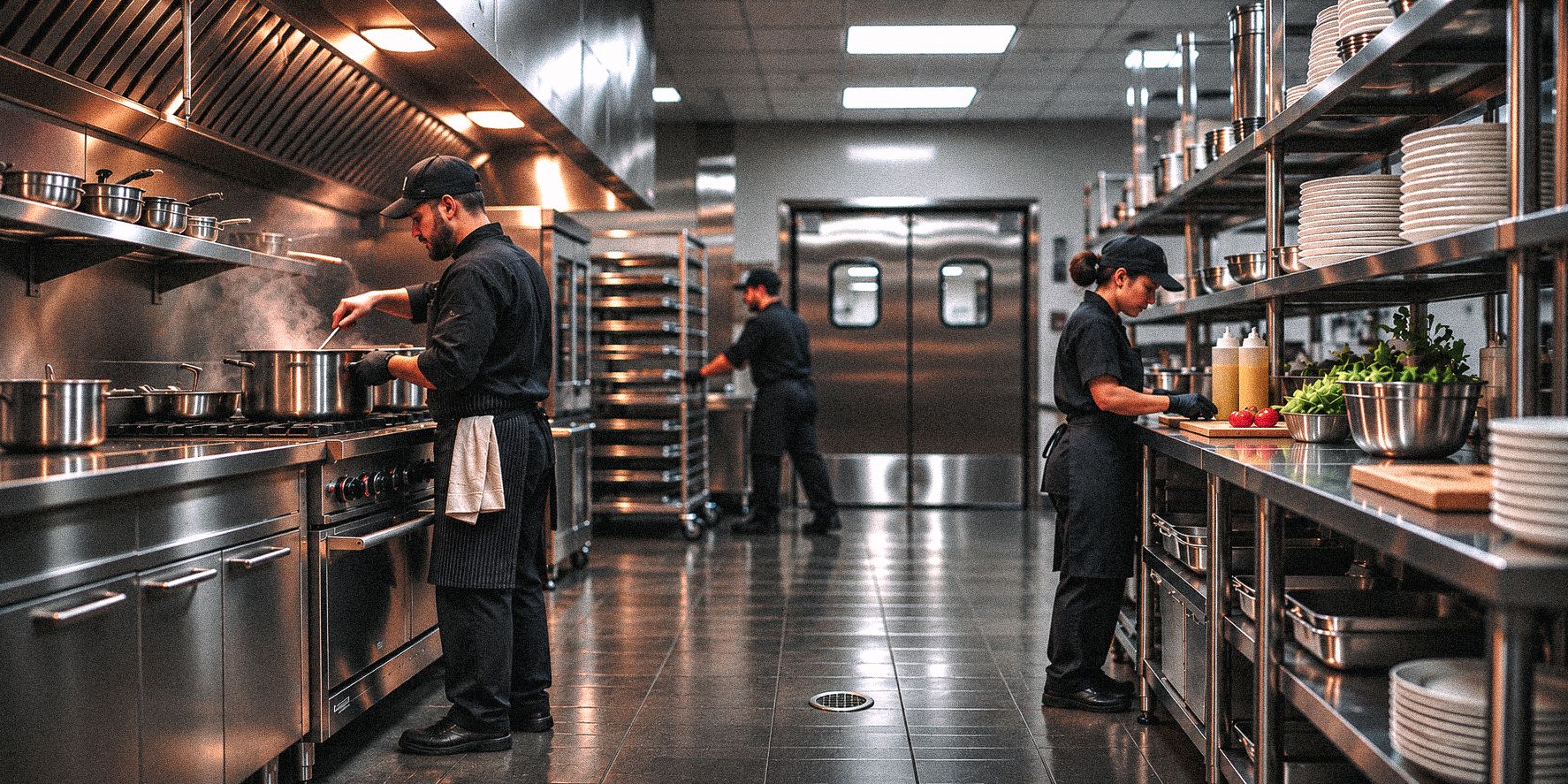
Restaurants & Commercial Kitchens
Keep the dining room open through Friday service.
A grease trap does not fail quietly. It backs up during a busy shift, and the location closes. LES cleans the trap and clears the lines before they block. We also handle the hood and the repair. So you are not calling three vendors at 9pm.
Services:
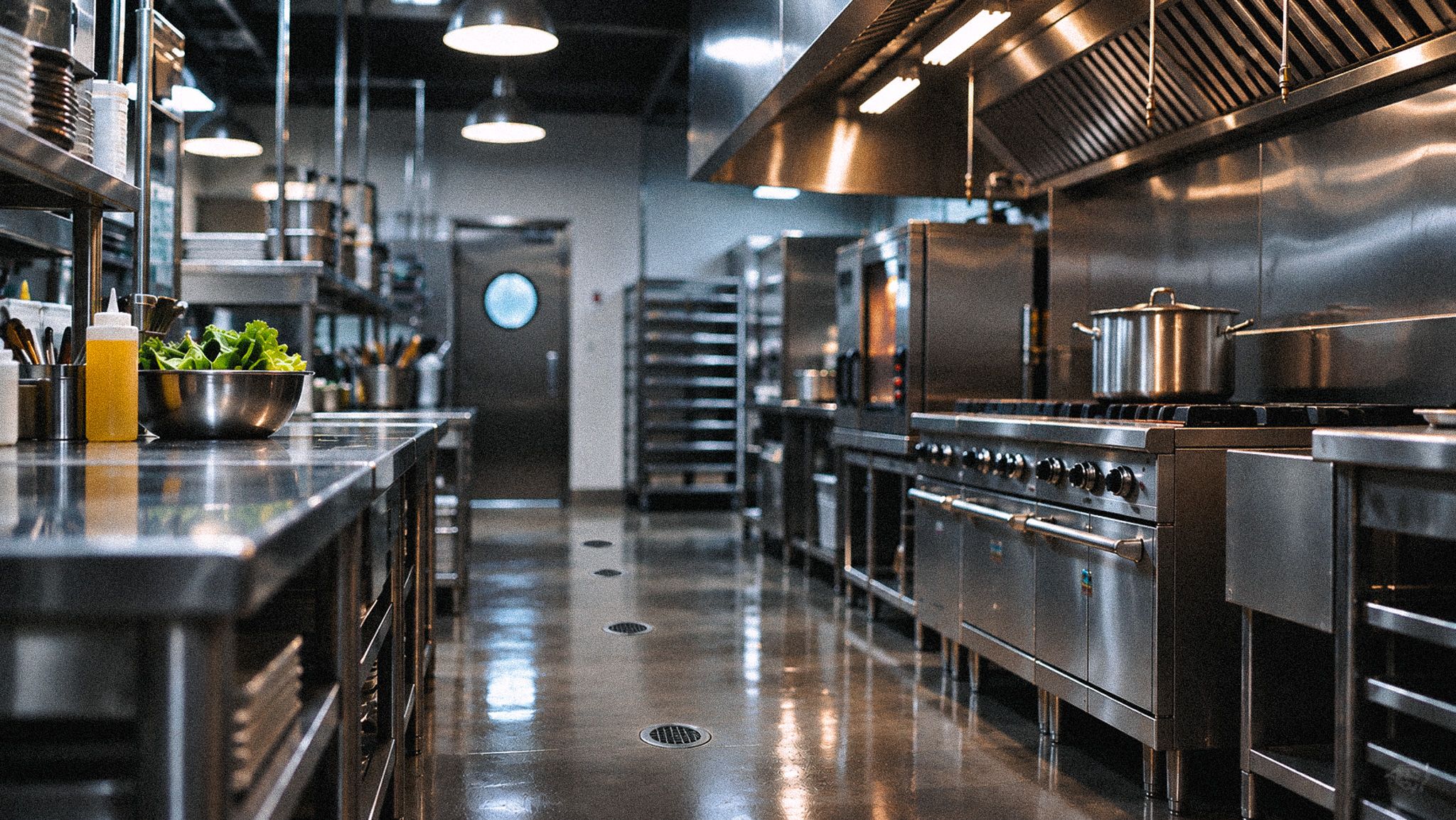
Grocery & Convenience Stores
One program across every store, not one contract per market.
At 40 sites, the problem is no longer grease. It is paperwork. Manifests come in four formats, two are missing, and no one can say when store 212 was last serviced. LES makes service the same everywhere and keeps all the records in one place.
Services:
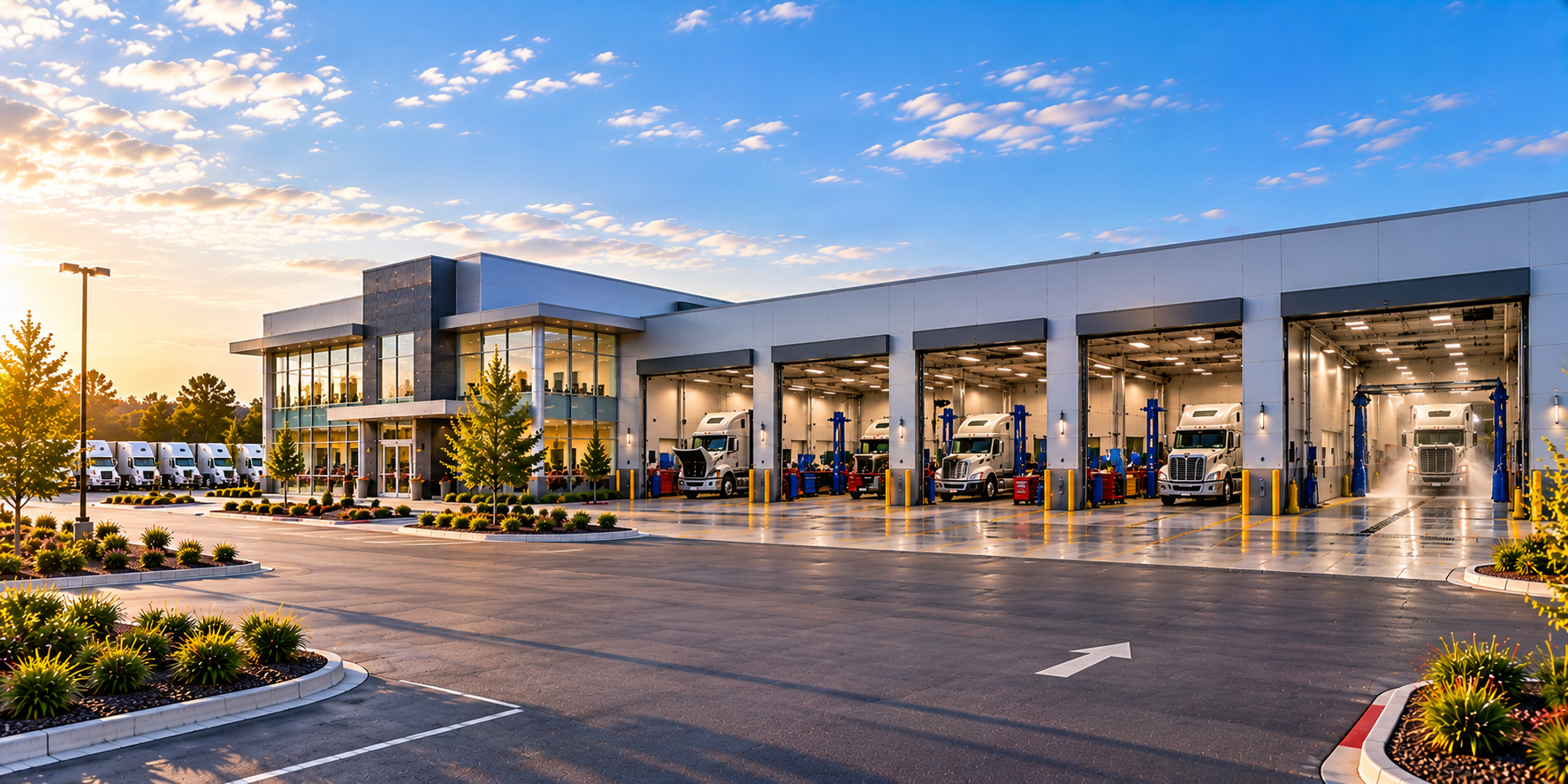
Fleet & Transportation
Keep the yard running and the discharge compliant.
A failed oil-water separator is a regulatory event, and those stop operations. LES services separators, trench drains and wash bay water on schedules set to how much you actually use them. We also flag a failing part before it leaks.
Services:
- Oil-Water Separator Service
- Trench drain cleaning
- Wash bay wastewater
- Wastewater Recycling
- Plumbing Repair coordination
- Stormwater separator service
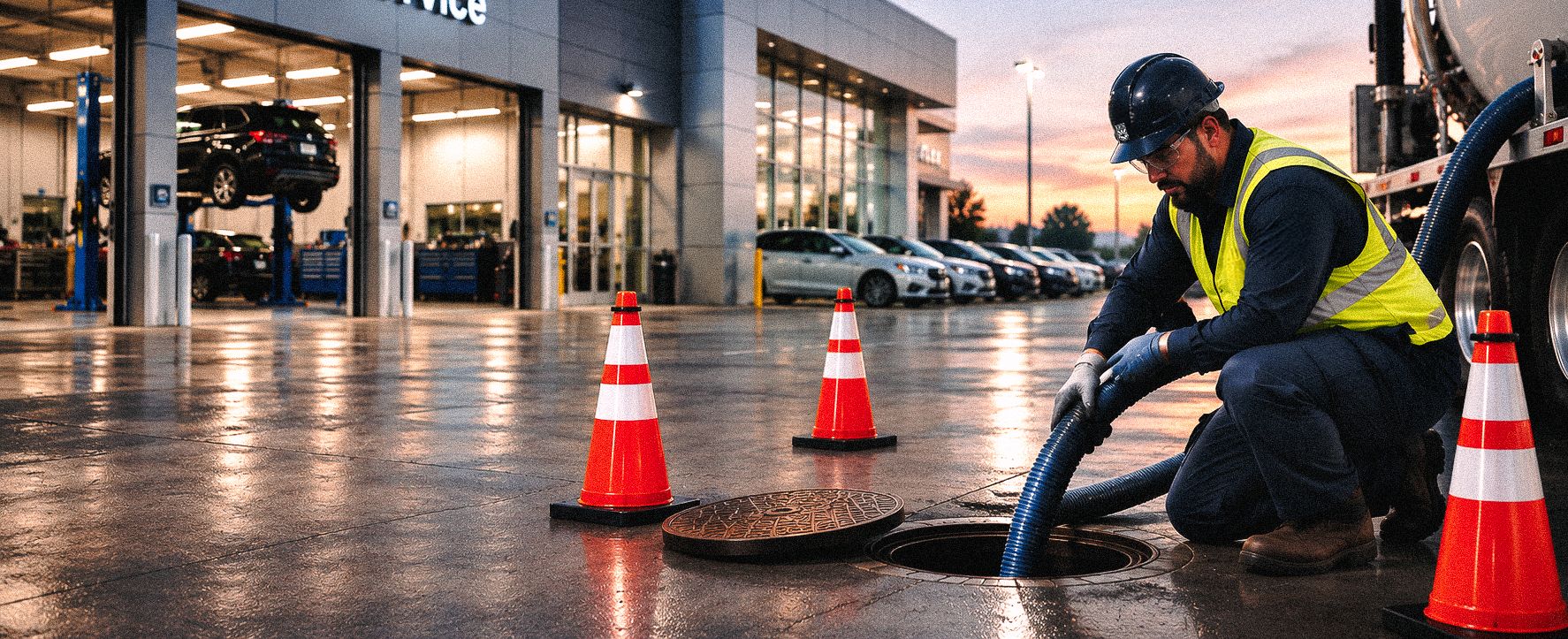
Automotive
Separator service that scales from one bay to a hundred locations.
Dealerships, car washes and quick-lube shops all make oily wastewater under different local rules. LES tracks the rule at each site and runs one program across all your locations.
Services:
- Oil-Water Separator Service
- Wash bay and interceptor service
- Wastewater Recycling
- Plumbing Repair coordination
- Stormwater separator service
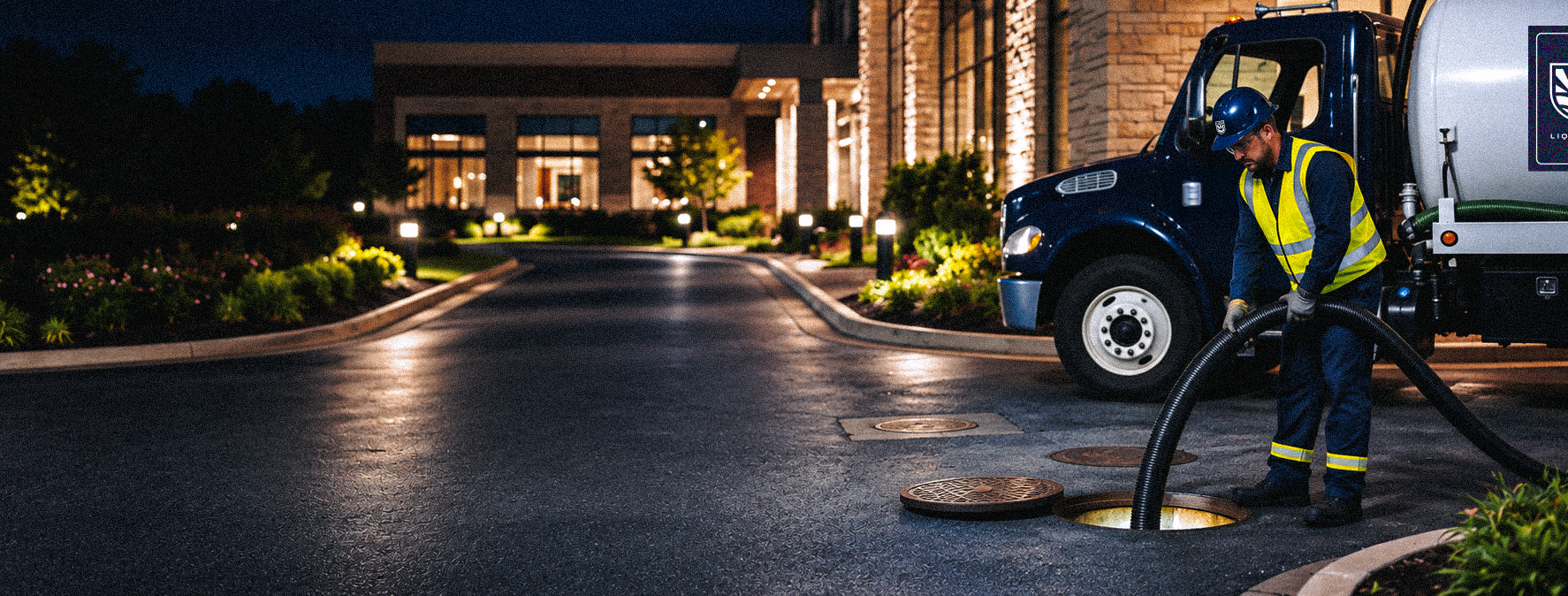
Hotels & Hospitality
Service the guest never sees.
The back of the house sits right under the front of the house. A backup or a bad smell can show up in an online review the same day. LES plans around room bookings and events, and inspects the system while we are there.
Services:
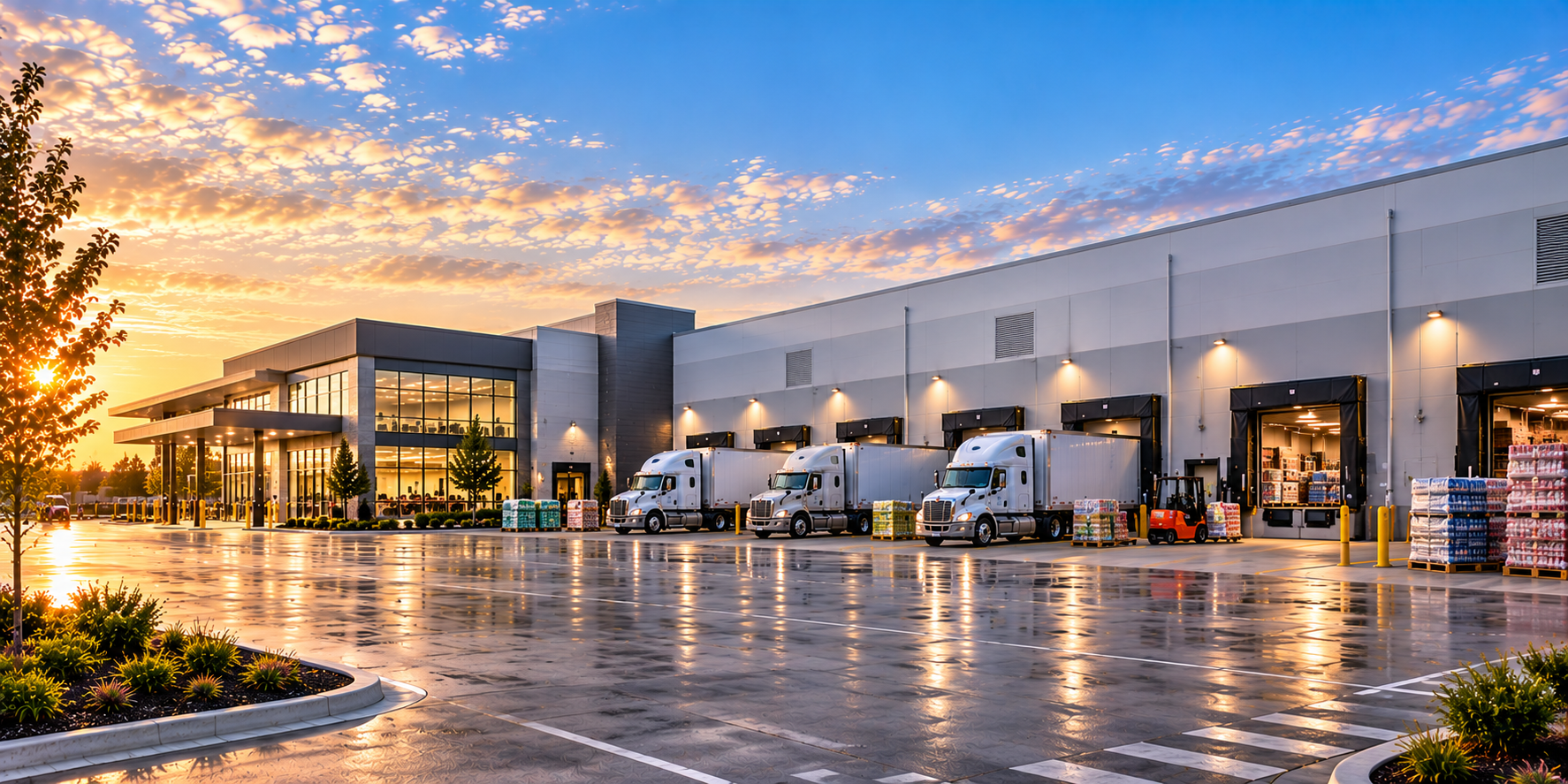
Industrial & Food Manufacturing
Protect production continuity and the discharge permit.
One discharge event can stop a production line and trigger a permit review. LES handles high-volume wastewater, oil-water separation and the pipes that carry it. Every step, from pickup to processing, is on record.
Services:
- Wastewater Recycling
- Grease Trap Service
- Used Cooking Oil Collection
- High-volume liquid waste collection
- Plumbing Repair coordination
- Resource Recovery Reporting
- Stormwater separator service
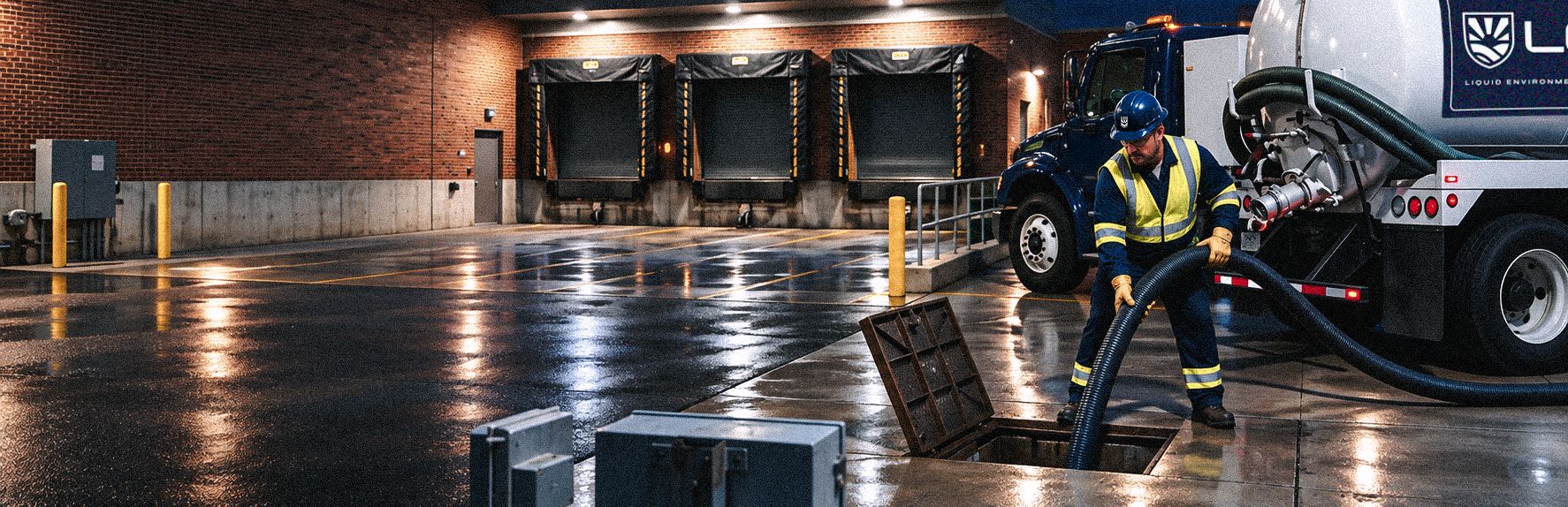
Healthcare
Documented service for a facility that cannot pause.
Kitchens run around the clock, and compliance records get audited. LES services the grease and drain systems on schedule and manages stormwater separators. We give your compliance team the records it needs without being asked.
Services:
- Grease Trap Service
- Used Cooking Oil Collection
- Drain Line Cleaning
- Stormwater separator service
- Resource Recovery Reporting
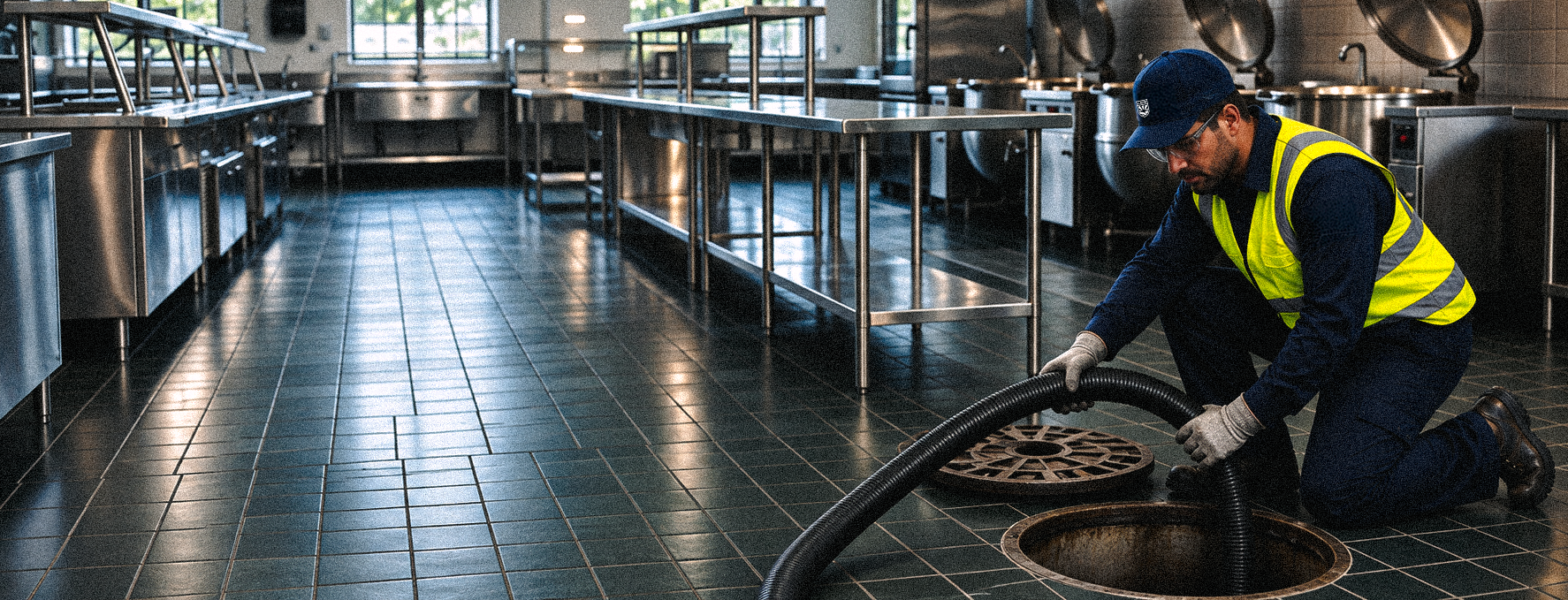
Schools & Universities
Dining serves lunch in September whether the interceptor is ready or not.
Heavy work waits for summer. So a problem found in September waits a year, or fails first. LES inspects all year and flags what needs the summer window. We service dining halls, residence halls and grounds to one standard across your campus or district.
Services:
A grease trap does not fail quietly. It backs up during a busy shift, and the location closes. LES cleans the trap and clears the lines before they block. We also handle the hood and the repair. So you are not calling three vendors at 9pm.
Explore Restaurant SolutionsServices:
At 40 sites, the problem is no longer grease. It is paperwork. Manifests come in four formats, two are missing, and no one can say when store 212 was last serviced. LES makes service the same everywhere and keeps all the records in one place.
Explore Grocery SolutionsServices:
A failed oil-water separator is a regulatory event, and those stop operations. LES services separators, trench drains and wash bay water on schedules set to how much you actually use them. We also flag a failing part before it leaks.
Explore Fleet SolutionsServices:
- Oil-Water Separator Service
- Trench drain cleaning
- Wash bay wastewater
- Wastewater Recycling
- Plumbing Repair coordination
- Stormwater separator service
Dealerships, car washes and quick-lube shops all make oily wastewater under different local rules. LES tracks the rule at each site and runs one program across all your locations.
Explore Automotive SolutionsServices:
- Oil-Water Separator Service
- Wash bay and interceptor service
- Wastewater Recycling
- Plumbing Repair coordination
- Stormwater separator service
The back of the house sits right under the front of the house. A backup or a bad smell can show up in an online review the same day. LES plans around room bookings and events, and inspects the system while we are there.
Explore Hospitality SolutionsServices:
One discharge event can stop a production line and trigger a permit review. LES handles high-volume wastewater, oil-water separation and the pipes that carry it. Every step, from pickup to processing, is on record.
Explore Industrial SolutionsServices:
- Wastewater Recycling
- Grease Trap Service
- Used Cooking Oil Collection
- High-volume liquid waste collection
- Plumbing Repair coordination
- Resource Recovery Reporting
- Stormwater separator service
Kitchens run around the clock, and compliance records get audited. LES services the grease and drain systems on schedule and manages stormwater separators. We give your compliance team the records it needs without being asked.
Explore Healthcare SolutionsServices:
- Grease Trap Service
- Used Cooking Oil Collection
- Drain Line Cleaning
- Stormwater separator service
- Resource Recovery Reporting
Heavy work waits for summer. So a problem found in September waits a year, or fails first. LES inspects all year and flags what needs the summer window. We service dining halls, residence halls and grounds to one standard across your campus or district.
Explore School & University SolutionsServices:
One Standard Nationwide. Every Gallon Accounted For.
LES operates 90+ facilities, 1,000+ trucks and tankers, and processing infrastructure built over more than 24 years.
Because we own every step, a program can keep one standard in every market. LES manages waste from pickup through processing. When we need qualified service partners, LES still owns the service standard, the records and the responsibility.
- Pickup
- Transport
- Processing
- Back into use
-
One standard in every market.
No rebuilding your program market by market. No resetting expectations each time you add a location.
-
Full chain of custody.
LES handles waste from start to finish. So we can record how many gallons came from each location and how they were handled.
-
94% of what we collect is recycled.
We send water, oil, grease and other materials back into use whenever we can. Online manifests and service records help with compliance, sustainability reports and ESG reporting.
Where others see waste, LES sees tomorrow’s resources.
Switching Should Cut Your Work, Not Add to It
01Assess
We review your locations, equipment, service history and the rules that apply. That sets a baseline and shows the risks.
02Optimize
We set schedules around how your sites really run and what the rules require.
03Protect
Each scheduled service inspects your equipment, records what we find and alerts your team to problems early.
04Manage
LES manages service, records, transport, processing, recycling and repair planning, all in one program.
Stop Managing Liquid Waste. Start Managing the Risk Behind It.
Do you run one facility or a thousand? LES can review your current program. We will show you ways to lower compliance risk, prevent emergencies, see more clearly and get more value from your waste.