

Usually repair
- Baffle or tee failure in a unit that's otherwise sound
- Lid, frame or gasket damage
- A single inlet or outlet connection problem
- Damage to one section of line
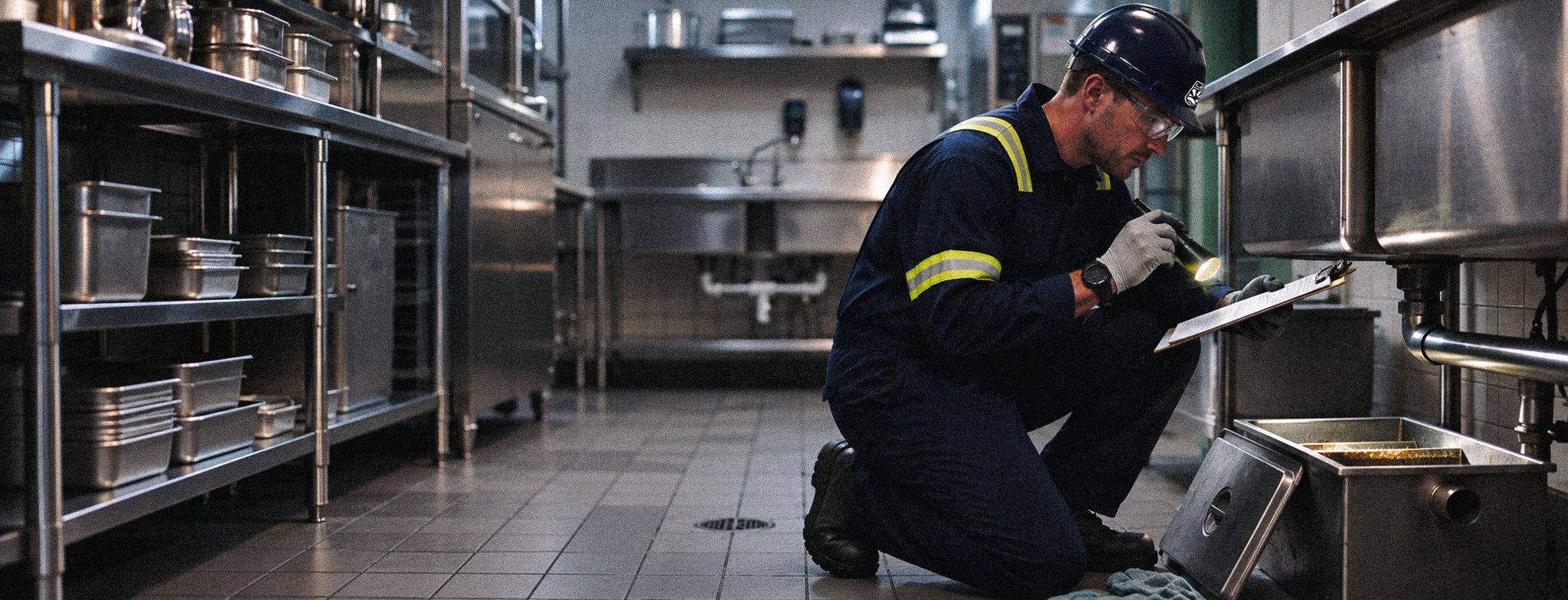
If the baffle has failed, grease flows straight to the sewer, no matter how recently the trap was pumped. LES finds those failures during routine service — and manages the repair.











Many grease trap problems are found by an inspector, a plumber at 11pm or a flooded kitchen floor. All three are costly ways to find out.
Every LES service visit includes a written inspection of the unit instead. We check the baffles, the lid and gasket seal, the inlet and outlet connections and the body of the trap. Problems get flagged while they're still small.
LES then manages the repair through screened commercial plumbing contractors in every market we serve. Because LES owns the collection and recycling network, the pump-out, the inspection and the record come from one team.
The liquid waste industry splits neatly in two, and the split doesn't help the customer.
Grease traps fail in a few predictable ways. Knowing them is the difference between a planned repair and a closed kitchen.
01
A visual inspection. If the problem is in the line, not the unit, a camera finds cracks, shifts and blockages exactly, instead of guessing.
02
You can't check or fix anything through a full trap. We fully pump out and clean the unit, and because LES owns the collection and recycling network, the waste is handled and recorded as part of the same job.
03
A written summary of what failed, what it will take to fix and whether repair or replacement makes more financial sense. No work starts without your approval.
04
Done by screened, licensed commercial plumbing contractors. LES manages them and schedules work around your business hours.
05
We confirm the work is done and add it to your service history, ready if a city inspector asks what changed and when.
City inspectors check the baffle walls and T-pipes during pump-outs, not just whether the trap was emptied. A missing or broken tee fails the inspection by itself.
If sewer lines are cleared and clog again within weeks, a broken outlet T-pipe is the usual cause. Hardened grease is passing straight into the drain pipes.
When cracked parts stop the trap from separating, wastewater backs up. Floor drains bubbling during the dinner rush is the classic sign.
An honest answer here saves you money. Getting it wrong either way is costly. Here's the general rule:
When replacement is the answer, LES manages grease trap and interceptor installation. We size the new unit for your real output and local rules — not just to match the old one. We also handle the permits and installation work.
Many FOG rules say a grease trap must be kept in working condition. That's a higher bar than being pumped on time.
A trap with a failed baffle can be serviced and still be out of compliance, because it isn't doing the job the rules require. Many businesses are truly surprised by this. They have the service records and paid the bills, and they still get a violation.
LES tracks wastewater rules through FOGLaw® and checks the unit's condition at every visit. So the equipment side of compliance is watched, not assumed.
The math here is very clear. The same failure costs very different amounts depending on when it's found.
LES runs 90+ facilities and 1,000+ trucks and tankers nationwide. Find service and local rules for your area:
Every LES service visit includes a written inspection of your unit's condition. When something needs fixing, we manage it. The repair, the cleaning and the compliance record all stay with one partner.